Showing posts with label sustainability. Show all posts

Wednesday, 30 August 2023

Viscose Scraps Patchwork Trousers


Hello! First up, apologies for these terrible, dark photos. We tried to take some pics just before we went on holiday but clearly the light levels were too gloomy. So even after some editing you still can't see what's going on too well. Anyway! 

I tend to find my projects largely fall into one of two camps: 
  1. A garment or accessory I really want to wear or use
  2. An idea or thought experiment or that I want to see come to fruition 
This project was definitely from the second camp. In my experience, when it comes to working with scraps, slinky woven fabrics such as viscose and Tencel are the hardest to find uses for. I've tried piecing them together to make a garment from previously, but it didn't hold up very well because of my choice of seam finishing, plus I wasn't in love with the outcome stylistically. So I wanted to see if I would have more success by using a similar piecing technique to the one I adopted for my patchwork quilted denim jacket project. 


Piecing:

I started by getting all my slinky woven scraps out and selecting some that formed a nice colour palette. As you can tell, I'm really into autumnal shades such as mustard, rust, teal and forest green. It's fun seeing my previous garment projects represented in this selection! There's leftovers here from a dress that I still wear a fair bit, a Vali top that I love, a rust coloured tank that didn't work for me that I gave to a friend, my slinky Luna pants, plus a couple of bits from the scraps bin at work. 


The next step was to dissect larger scraps and trim everything up into rectangles. I find my rotary cutter, cutting mat and set square make this part of the process pretty quick. Then with the rectangles laid out, I started to find a pair that each have an edge about the same length. I pined, stitched and overlocked them together, then pressed the seam allowances to one side (I do this in batches to save time and energy). 

I would then add another shape to that joined pair, or another pair of shapes, with an edge a similar length and so on. The shapes then started to come together to make larger 'islands' of fabric. You'll often get to a point where you need to cut some 'custom' shapes to make the design work, so I kept some of the original scraps back for that. The main piece of advice is to not overthink the piecing process. It's super easy to spend too long questioning the position of each rectangle in relation to the rest and drive yourself insane!


Pattern:

It took quite a long time to eventually land on what I was actually going to make from these pieced together scraps. At first I thought a top, then I realised that I'm in far shorter supply of bottoms and I thought a wide-legged pair of culottes might look good. Then I realised I had enough scraps to make full-length, palazzo-style trousers, so I went with that plan. The pattern I created for this project is a hybrid of two other patterns. I used the top part of the trouser section from the Peppermint magazine/Ready to Sew Valley jumpsuit (then lengthened the rise in both the front and back). Plus I used the leg width and shape of the Wide-leg jumpsuit pattern by The Assembly Line, but eliminated the side seam as per the Valley jumpsuit. Having no side seam was going to result in less waste and fewer awkward shapes of pieced fabric at the side seams. 


Construction:

The 'fabric' I was creating by piecing scraps together slowly continued to grow until I could see that it had become big enough to fit the pattern piece on top. Obviously, I needed two of these large shapes of fabric. Then I cut out a pair of the pattern piece and constructed then garment as if I had cut it out of a flat piece of virgin fabric. The waist is elasticated, the channel constructed by simply turning down the top edge twice and edge stitching. 


Thoughts:

I LOVE that I managed to make an entire garment from leftovers from other projects, the scraps that would so often just go into the bin. I'm not sure if I'm super into the finished look, but I'm certainly into how they feel! Tencel and viscose fabrics usually have a wonderful drape to them anyhow, but all the additional seaming on this project has given the fabric some extra weight and made them somehow feel extra luxe. I do notice the seams on the reverse side a little against my skin, but I wouldn't describe it as unpleasant or annoying. 

I really hope that more sewers/sewists develop the habit of saving their scraps and leftovers where possible to use for other things. It's a good way to extract more value from the natural resources and the financial costs that went into the fabric in the first place, and it can keep textiles out of landfill for a bit longer. 


Thursday, 26 November 2020

Mend it, Wear it, Love it: I WROTE A BOOK!!!!!

So, funny story: I WROTE A BOOK!!!! An actual, IRL, paper-and-ink, honest-to-goodness book! I know, I can barely believe it either.

Towards the beginning of Lockdown 1.0 DK publishers approached me to write a beginner-friendly book that will help people make their clothes last longer. After explaining why this is important, it covers simple mending techniques for common garment mishaps, ideas and how-tos for altering the fit and style of your garments, as well as loads of info on how to care for your clothes properly. The book is called ‘Mend it, Wear it, Love it’ and will be available from 4th Feb 2021. It’s currently available for pre-order, and if you’re in the U.K., please may I recommend checking out Bookshop.org to support indie bookshops if you’re thinking of ordering a copy (it’s really reasonable, BTW).


Truth be told, when DK contacted me, I was feeling incredibly overwhelmed by the new reality of life in lockdown. I had to think hard about whether or not taking this on was the right thing to do, but writing it ended up being a truly wonderful, if frantic, experience. And now that I have a copy in my possession, I could not be more proud to have been part of its creation. The design team have done an amazing job, and I genuinely think that content is really useful for those wanting to make their wardrobe more sustainable.


DK has a rep for producing very clear, user-friendly, practical guides. So whilst being pretty, I’m also confident that ‘Mend it, Wear it, Love it’ sufficiently supports beginners through all the mending, refitting and altering techniques, even if you’re completely new to the sewing game. As I was writing the steps for each technique, I drew sketches for each step that the fantastic illustrator Steven Marsden then made actually recognisable!


For me, the parts of the book that I’m most proud of tho, are the sections where the problems of today’s clothing industry are linked to the practical steps in this book. My aim was to help the reader feel empowered and emboldened to give the techniques a try, including the embracing of imperfection. We also managed to make the topic of laundry and garment care interesting hahaha!


‘Any repair that extends the life of a garment by even one more wear is a major success’ - me!

Thursday, 27 June 2019

Sustainable Sewing: Zero-Waste Product Swaps


For the last six months or so I've been seeking out swaps I can make around the home, switching our usual products for non-disposable versions. There are, of course, heaps of fancy-looking, eco-products now available in ethical shops and online to help with this. But I've been relieved to find that a basic level of sewing ability and the reinterpretation of textiles we already own has saved me a stack, even if my versions aren't so pretty! I know that a lot of people are trying to make similar changes, so in the hope of providing inspiration, here's what I've been making:


1) Dish scrubbers. There was a surprisingly involved discussion in the comments section of my IG post about possible alternatives for what to use to when washing up. I bought a couple of VERY cute, fruit-themed, crocheted pads from Etsy, however they disintegrated pretty rapidly when they were put to the task of actually washing up multiple times a day. I finally landed on making these towelling circles for washing up, instead of the disposable, synthetic, sponge scrubbers we were using. I cut up an old, 100% cotton towel that was already pretty abbrasive, and overlocked/serged two layers together. You could even stuff them with scraps if you wanted to make them bulkier and possibly easier to grip. I made three so that I could chuck them in the wash regularly, and after six months of intense use, I can report that they are only just starting to develop a couple of holes. I don't think this is bad going, considering we don't have a dish washer and therefore do A LOT of washing up. And because these are 100% cotton, I feel much happier about eventually chucking them in the textile recycling bank (which may actually mean landfill because sadly who knows where it all actually goes).


2) Surface wiping cloths. Instead of using the same synthetic sponge scrubbers that we used to use to wash up with, or those foam-y sponge cloths that eventually disintegrate, I cut up yet more of that sacrificial towel (which we got via Freecycle about 10 years ago) and simply overlocked around the edges. Pat actually prefers these to wash up with as well; I think I made the circle ones a bit small for him. Anyways, these have been great.


3) Hands/face cloths. A former baby towel that got too ratty for bath-time got cut up into squares and the edges overlocked. We use them dampened for dealing with sticky toddler hands and faces after meals times. I'm not proud to admit that we used to keep a pack of disposable wet wipes/baby wipes on the dining table for this purpose. Marilla Walker recently shared on IG that she'd made some far more attractive ones of these using scraps of vintage towelling, but whatever works!


4) Nappy changing wipes. When we emerged from the 'milky and puke-y' stage of babyhood, we were left with a mountain of muslin cloths. I've still got some on hand for mopping up spills and covering the table when it's painting time, however, I've given a couple of the softest muslins the old cut-into-squares-and-overlock-around-the-edges treatment. I've been using these to further reduce the amount of disposable wet wipes/baby wipes we get through by dampening one before a nappy change to use if it's just a wee-based situation. I then chuck the used wipe directly into the washing machine to be washed in the next round of laundry. I still use regular wet wipes for dealing with pooey nappy changes, but these muslin squares alternative have meant we are buying the disposable kind far less frequently. I'm kicking myself for not doing this when my daughter was a baby/toddler too; I shudder to think how many of those things, plus the plastic packets, we've sent to landfill.


5) Handkerchiefs. I wrote about my foray into making fabric hankies to use instead of paper tissues here, but they have since been embraced by the whole family, so we needed MORE. This batch are bigger, 'man-sized' hankies (45cm x 45cm before hemming) made from a soft, old, bed sheet. I've discovered that when choosing suitable fabric for making them, softness really is the most important factor. Even though we have this new stack in addition to the previous ones, we still don't have enough if one of us has a cold or a bout of hay fever, so more are on the way. Plus Dolores has lost most of hers at school. 


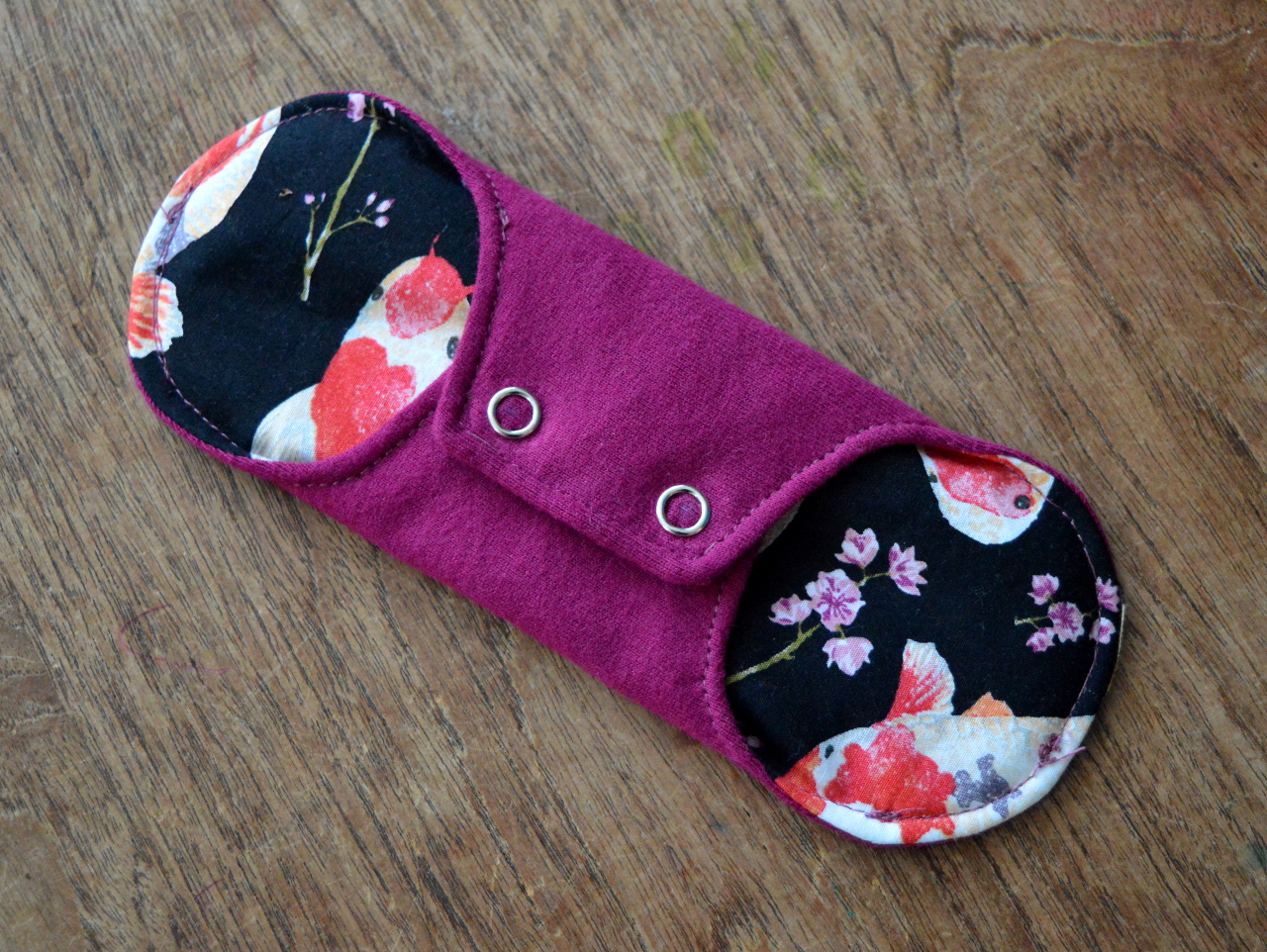
6) Menstrual pads/Panty liners. Last year I made a batch of menstrual pads/panty liners, and I'm pleased to report that they are still going strong. I have not bought any panty liners since making these, which is a total win.


7) Wash mitt. I made a basic wash mitt for myself from yet more of the sacrificial towel. I zigzagged two layers of towelling together that I'd cut into the shape of a mitt. I used some leftover bias binding to finish the edge of the hole where your hand goes in, and some grosgrain to make a hanging loop, although I never actually hang it up. Picture an oven mitt made from an old towel. It didn't warrant a photo, but it does gets used everyday.


8) Cotton pads. I don't use cotton wool pads very often because I prefer to remove my make up with a foaming face wash, rather than specific make up remover. However, when my current stash of cotton wool pads runs out, I plan to make some like these from the Helen's Closet blog for taking off nail varnish.


So what about you? Are there any product swaps you've made that have been made easier and/or cheaper because you have a sewing machine and stash of textiles? Have you made any alternatives to products not listed above? I'm always looking for new ideas!

Saturday, 23 February 2019

So, I Was in The Guardian Talking About Sustainable Clothing...

(image credit: Graeme Robertson/The Guardian)

Earlier this week The Guardian newspaper published an article called 'Don't feed the monster!', which included some interviews with people who no longer buy new clothes by way of discussing approaches to dressing sustainably. I was lucky enough to be included in the article, in effect to represent the DIY facet of the topic. What 'sustainable clothing' actually is is complicated of course, and means different things to different people (if they've spent any time thinking about it in the first place!). But it's clear from all the stats that RTW, and the lower-end 'fast fashion' business model in particular, is incredibly damaging to the environment and the workers involved in its manufacture. So sustainable clothing is something that we all need to address and consider for ourselves.  

I am incredibly grateful to have been asked to contribute to this discussion on a broader platform than this blog and my Instagram account usually provides, and I'm so happy to have some new followers to both since the article's publication that are clearly the kind of people who consider sustainability important. I feel that some of what I was trying to get across in the interview ended up being a little disjointed, and I'd like to explain my stance more freely here.


(image credit: Graeme Robertson/The Guardian)

Firstly, I want to emphasise that I don't think that sewing your own clothing should necessarily be considered a sustainable option by default, and certainly is not as sustainable as sourcing all clothing secondhand. Even though I personally try to use secondhand fabric and thrifted garments as a starting point for some of my sewing projects rather than always buying new fabric, I'm careful not to ignore the fact that home sewing still produces a lot of waste and uses a lot of resources. And I doubt that any fast-fashion garment workers working in unpleasant and dangerous conditions for barely any money would thank me for opting out of buying mass-produced clothing completely. 

Yet I do think that, as far as environmental impact goes at least, home sewing can be more sustainable than buying RTW. All the choices that sewing your own garments requires you to make (are you starting with a sewing pattern, which version, any changes to the design or fit, what type and colour of fabric, what buttons/notions blah blah blah...) means you can't help but end up with an item that is uniquely yours: that becomes an investment of self. And the more you learn about your own style, preferences and lifestyle requirements, and the better you get at altering and fitting garments to your own body, the more likely you are to end up with a garment that is entirely custom to you and you have deep investment in. Theoretically, most home sewn garments, if created with care and thought, should get countless more wears than the average fast-fashion item. Which is four, out of interested. 

(image credit: Graeme Robertson/The Guardian)

A year and a half ago, I wrote this post about how we can be more sustainable in our home sewing, and I'm sure this is something that I will continue to think and write about going forwards. Of course, one way you can make sure you're getting the most out of your existing selection of home made garments, and learn lots of useful lessons to help make your future projects as successful as possible, is to challenge yourself during this year's Me-Made-May! If you have any thoughts or feelings about dressing sustainably, or more sustainably to be accurate, in relation to handmade clothing or more generally, I'd LOVE to read them so please leave a comment below or hit me up on IG (@sozoblog). 

Friday, 7 December 2018

Free Pattern Friday: Washable Menstrual Pads


Welcome to my monthly 'Free Pattern Friday' feature, where I road test a free sewing pattern or tutorial: sometimes a children's one, sometimes a women's one. I publish these posts every first Friday of the month, timed to provide inspiration for those of you who plan to get their sew on over the weekend. I firmly believe that, if you pick your projects carefully, sewing doesn't have to be a crazy-expensive way to clothe yourself and your family. Thanks to all the amazing pattern designers who have offered up their hard work for us to enjoy for free.


I'm definitely still on the sustainable-sewing (or sewing for sustainability) kick that I begun a month ago. After the successful making and implementing of fabric handkerchiefs to cut down my families consumption of tissues (and the plastic that they come wrapped in), I felt it was finally time to try something that I've been planning to make for years: washable menstrual pads/panty liners. 

My initial research found that different people swear that a myriad of different fabrics are the best for the job, but having found this easy-to-use free pattern and tutorial by Luna Wolf (thank you, Victoria!), I decided just to get stuck in and have a go, and hopefully figure out my own preferences through experimentation. BTW, although this is a free pattern, there is a link on her site where you can buy her a cup of tea via Paypal to say thanks. Some free patterns are released as a way to encourage customers to buy some of a designer's other products. But Luna Wolf/Victoria doesn't have anything for sale, so this is a really nice way to show your appreciation.  


Pattern type and sizing info:

The Luna Wolf pattern/instructions actually includes patterns for five different types of pad: pantiliner, 8.5 inch pad, 9 inch pad, 10.5 inch pad, and 11.75 inch pad, along with fabric suggestions and step-by-step  instructions. Personally, I prefer wearing tampons during my period (small personal deviationI know that menstrual cups are the more sustainable option, however I had a bad experience with a moon cup and to be honest I'm afraid to try them again. As a compromise, I've started buying tampons from TOTM, as they are made from unbleached, GOTS certified organic cotton, and do not contain, nor are wrapped in, any plastic. The next step I'm about to take is to start using non-applicator tampons to reduce waste further. TMI? Don't care), but prefer using panty liners at the end of my period, and at other times through out the month. It's my consumption of these disposable panty liners that I'm trying to put an end to with this project. I hate to think about how many of them I've sent to landfill during my life so far, and I'm determined not to throw away any more. Long story short, I used the smallest sized pattern for these.  

Fabric info:

As I mentioned above, many makers of washable pads seem to have very strong ideas about the best fabrics and fibres for absorbency, preventing irritation, longevity and so on. The Luna Wolf pattern/instructions includes advice about which types of fabrics can be used for the topping, backing and the core, and how many layers you may need. I wasn't making pads for the heaviest part of my period, so maximum absorbency wasn't necessarily my goal. Therefore I decided to try mainly using what I already had to hand. I did, however, 'splash out' on a fat quarter of PUL, a type of breathable but waterproof fabric that is often used for washable nappies, that was mentioned by a lot of pads makers during my research. It cost £3 from Plush Addict, and I reckon nine small pads could be squeezed out of a fat quarter. 


My initial experiments can be seen in the picture above. The one on the left is formed from the following: quilting cotton topping, three layers of 100% jersey for the core, and quilting cotton and PUL for the backing. The one on the left is formed thus: 100% cotton jersey for the topping, plus three layers of the same for the core, and only PUL for the backing. Personally, I found the jersey better for the topping as it was slightly more absorbent and a bit softer. The PUL-only backing was fine but I preferred the heft and appearance of the extra layer of woven cotton backing. 


For my 'final' versions (pictured above), I decided on the following: 100% cotton jersey topping, three layers of brushed cotton for the core (made from a decommissioned pair of pyjama bottoms, see below), and PUL and woven cotton for the backing. 


Findings:

I have yet to try out the new batch of pads/liners during a period, however the first batch worked fairly well, so I have high expectations for the improved versions. The size and shape of the pattern seemed to work perfectly for me. When using the first versions, I could sometimes feel the 'wings' against my thighs, which hopefully won't be the case with the second batch as I've added an additional set of press studs to each. It did, however, feel great to be using a reusable product rather than a disposable one and I'd like to encourage anyone who has a period, uses pads or liners and likes to sew to try making something like this to cut down their waste.

Customisation ideas:

I'm not sure this is exactly the type of project to let your creativity run wild, however, here are some ideas for ways you may wish to try to alter/improve this pattern:

  • Experiment with different fabrics and fibres for the topping, core and backing. There are heaps of washable pads listed on Etsy, so that would be a good place to see what other people have used
  • I've heard talk of some people making pads with removable inserts, I'm not entirely sure of the purpose for this, possibly for easier laundering?
  • Stitch the core to the topping in a different way, creating a striped or check pattern perhaps?
  • If you don't have this type of press studs and clamp combo in your stash, try stitch-on press studs or buttons/button holes for fastening
  • One commenter on my Instagram post about this topic said that she found plastic press studs lasted longer than metal ones. I've used these metal ones on baby dribble bibs that have seen many washes though, and haven't had any problems with them

Would I make it again?

I'm guessing that my total of six pads may not be enough to see me through the month, so I may make more in the future. And if I do, I'm 95% sure this will be the pattern I'll use. These would also be a quick and fun project to give to a sustainably-minded friend who has made noises about switching to washable pads but has yet to take the leap (niche, I grant you). 

Have you made washable pads or liners? How have you found they fair compared to the shop-bought, disposable versions? Have you swapped all your period products over to washables?

Friday, 2 November 2018

Free Pattern Friday: Handkerchiefs and on Sewing to Reduce Plastic


Welcome to my monthly 'Free Pattern Friday' feature, where I normally road test a free sewing pattern or tutorial: sometimes a children's one, sometimes a women's one. I publish these posts every first Friday of the month, timed to provide inspiration for those of you who plan to get their sew on over the weekend. I firmly believe that, if you pick your projects carefully, sewing doesn't have to be a crazy-expensive way to clothe yourself and your family. Thanks to all the amazing pattern designers who have offered up their hard work for us to enjoy for free.

However, I'm going on a bit of a tangent with this month's instalment, so apologies if you swung by for a regular review of a free pattern (I flatter myself!). Today I want to write about sewing from a slightly different angle. With all the awesome new sewing patterns, beautiful fabric, labour-saving equipment and eye-wateringly expensive machinery available for sewers/sewists to buy, it's easy to buy into (sorry for the pun) the idea that sewing is like many other activities: a pass-time that will cost you a fair amount of money to participate in. But as skilled sewers, we are doing ourselves a disservice. We have forgotten, or perhaps more accurately, have allowed ourselves to be coaxed away from the belief that sewing is a superpower that can save money and resources, perhaps over time if not immediately. 

The point I'm trying to make is that the 'drop £15 on a lovely new sewing pattern, drop £20 on gorgeous fabric to make it in, sew it up then put it on Instagram' formula isn't the only way to engage in and utilise sewing. Don't get me wrong, as you can tell from this blog and from my own Instagram feed, I LOVE making a fabulous, well-fitting, wearable garment that helps me visually communicate to the world who I am and how I feel. But, increasingly, I am trying to make a conscious effort to do more of the type of sewing that the women from previous generations used to do: the mending, the reworking, the fulfilling needs in the home without necessarily spending money on new materials. 

What I'm interested in thinking about at the moment is ways we can use our sewing skills to provide for ourselves and our families, as well as to have 
a positive environmental impact. And as anyone who has been sewing for more than five minutes will have realised, it's impossible not to accumulate a lot of stuff (fabric, patterns, zips, buttons, threads, blah blah). We already have a lot to work with. I think we need to encourage ourselves to flex our creativity more often to do more than just follow the steps of a sewing pattern, and work out how to turn some of what we have accumulated into some of the things we need in our daily lives (other than clothing). 


So how can we use our sewing skills to save money and resources? SO MANY WAYS. We have serious powers. We can mend ripped seams, replace missing buttons, knock up a fancy dress costume from an old net curtain, make the fabric totes and produce bags that we now take to the supermarket instead of accepting plastic bags, and infinitely more. 

Speaking of plastic. We (hopefully) all know now that not all plastic is recyclable. And recently we've been reading reports that the majority of plastic we think we're sending to be recycled isn't actually recycled anyway. I read a horrendous statistic recently (sorry can't remember the source) that said that people have produced more plastic in the last decade than we did in the WHOLE OF THE 20TH CENTURY, AND that only 9% of all plastic ever produced has been recycled. So like many people, I've been looking at my own waste: the amount and types of things my family sends to landfill or to be 'recycled', plastic very much included. I'm focusing on a few products that my family consume and then send to landfill at a time, and am trying to find and/or make alternatives that are more sustainable.

All of which is a long-winded explanation and preamble to say that I've been making hankies. Yonks ago my husband and I got ourselves hooked on buying those multipacks of pocket tissues, with their layers upon layers of non-recyclable plastic. More recently I started buying boxes of tissues to have round the home to reduce the amount of plastic we were throwing away, but I felt that I could go one step better by making old-school, washable handkerchiefs. Now I'm hooked;, it's one of the quickest, cheapest and most satisfying sewing projects I've ever undertaken. It will not surprise you to learn that the process entails simply cutting and hemming a square of fabric, but whilst researching how big to cut my squares, I found this decent Wikihow tutorial if you feel you would like some guidance. 

The first batch I made was from some stripy cotton that lives in my stash and usually gets used for toiling/muslin-making. It has a similar weight and softness to bedsheets, and it's proven perfect for hankie making. The squares I cut were 30cm X 30cm, but I have found them to be slightly too small for an adult woman, so the next couple destined for my own use were 35cm-ish X 35cm-ish pre-hemming. I must admit, having been used to using tissues myself for so long, it took me a while to get used to blowing my nose on fabric, but I've started to find it somewhat luxurious (particularly when I've bothered to iron and fold them into nice squares!).


With my second batch (pictured above), I cast my net a little wider for candidates as I went through my fabric scraps tub. The anchor, spotty and strawberry fabrics are all slightly thicker than the stripy stuff. They aren't quite as nice to use, but are perfectly adequate and will probably soften through repeated laundering. I'd say the thickest weight fabric that is suitable for making handkerchiefs is a light quilting cotton type deal, and a soft bed sheet type affair is ideal. The strawberry fabric hankie is for my daughter, the smaller anchor and the spotty ones are for me, and I also made a couple of anchor hankies for my husband (40cm X 40cm). He has the worst sinuses of anyone I have ever met and gets through a shocking number of tissues per week. I'm hoping that I can convert him. 

Next I plan to try some scraps of cotton lawn. How lovely would a set of Liberty or Cobra corsage cotton lawn hankies be as a Christmas present? I think that would be super fancy. 

What about you? Are you a seasoned hankie-user? Or, like my best friend, can you just not get behind blowing your nose on fabric?! What have you made to replace a disposable/wasteful item you use in you're daily life?

Thursday, 15 March 2018

Busting My Stash. No, Really. I Mean it This Time.

(image source: Time To Sew)

In my recent post about the unsustainability of sewing, I made the argument that it would be difficult to describe sewing as a sustainable activity, and certainly not the most sustainable way to dress ourselves. However, I did go on to list a number of ways in which us sewers/sewists could make sewing more sustainable. Essentially, all of the ideas I came up with lead towards the goal of making clothes that should last you for years because, A) they fit you perfectly and, B) are styles you love to wear that fit with your lifestyle.

But in writing that post, I forgot to discuss something else that thankfully the ever-awesome Sarah from Fabric Tragic brought up in the comments: the over consumption and hoarding of fabric. I'm pretty embarrassed to have forgotten to include that topic in my post as it's something I think about A LOT. Like, A LOT.

Currently on Instagram there's a hashtag/call to arms doing the rounds called #makeyourstash. It was started by @timetosew and @pilar_bear to encourage sewers to use a piece of fabric that has been in their stash for 6 months or more. They are publishing some accompanying blog posts and initiating stash-related discussions on IG, including recently asking 'what's your ideal stash?'. I think it is a fantastic and worthwhile idea, and by the looks of things, they have already encouraged a lot of people to make stuff from what they already own. Trying to encourage other members of the sewing community to use their fabric stash is not a new idea of course (and I'm not suggesting that the creators of this one think that it is); there's been a whole host of stash busting initiatives within the sewing community over the years. I even made my own silly little logo a squillion years ago in an attempt to encourage people to bust their stash. But I'm grateful to Kate and Pilar for taking up this mantle again, and doing so with a fresh and accessible approach. I think these are important things to think about and discuss.

So what's so bad about having a large fabric stash? Personally, I feel the over consumption of fabric is as damaging as the over consumption of any other manufactured thing. The environment is being irreversibly screwed over, in part because those of us in developed countries can't seem to quench our thirst for new stuff. We've got to slow down in all areas of our consumption, including the fabric us sewers/sewists are secretly, or not so secretly, hoarding.

Me? I've got a sizeable stash just like almost everyone else in the sewing community and to me it feels like an uncomfortable amount to own. I'm definitely not sitting here having figured it all out, but I am finally starting to take some steps towards getting my fabric stash under control, and therefore more representative of how I am trying to consume stuff in other areas of my life. So, what am I doing about it?

  • First up, I'm being honest. Towards the end of last year I pulled all my fabric out (again), refolded it (again), and counted what's there. At that time I had about 80 pieces of fabric and about 20-30 refashionable secondhand garments, plus I've already purged my stash of anything I don't like or can't see myself using. Gulp. 
  • I've arranged my stash so that it's easily accessible and (mostly) all in one place. Shortly after we moved into this flat about 18 months ago, I got a handyman to come round and build me an extra shelf in our airing cupboard for it to live on. I sorted everything into three sections: wovens, knits and refashionable garments (plus a carrier bag full of lining fabrics and pieces destined for toiling). Now everything is more or less eye level and I can see what's in there with ease. I can remember what I already have more easily because I've seen most of it recently. I must admit that my scraps-and-small-pieces tubs are currently in another room, but once my main stash gets whittled down a bit, I want to put those tubs on that shelf too. 
  • I'm only buying/acquiring fabric if I am sure what type of garment (and very often which  precise sewing pattern) I want to make with it. A stash busting purist would probably put themselves on a total No New Fabric ban, but I know that that approach would leave me feeling frustrated and uninspired, which is the opposite of how sewing is meant to feel and would negate sewing's benefits to mental health. I did a bit of a personal style-180 a couple of years ago, and without making any additions to my stash, I wouldn't have been able to re-stock my wardrobe with clothes that represent who I am nowadays. 
  • Noting down the potential fabric/pattern pairings I've come up with has been essential for getting those garments out of my brain and into reality. Some people use apps like Cora and Evernote or even spreadsheet files to keep track of their stashes. Personally, I have a simple list on my phone which I look at, add to and edit pretty regularly. With a pool of potential projects lined up, it's fun to take a peek and decide which I'm most excited to tackle next, or which garment I'd like to have available to wear the soonest. 
  • I like a challenge to give me some momentum, and whilst I DO NOT condone rush sewing or sewing just to use up stash, I have been committed to using up one piece of fabric per week for about 20 weeks now. This idea might horrify some sewers, but I promise that I'm only making things that I really want to wear (or want my children to have) and I'm not skipping on careful project planning and the other steps that will up my chances at creating a successful and long-living garment. 

I'm confident that, even if my current well of sewing time dries up a bit, I'm on track to get my stash to a size and state that I'm much happier with within a year or so. What about you? Are you happy with your stash as it is? Have you tried, or are you currently trying, to implement ways to reduce it? Or does that sound absurd or counter-productive to you? I'd love to hear your fabric stash-related thoughts.

Thursday, 16 November 2017

The Unsustainability of Sewing


Have you heard about Earth Overshoot Day? Its definition (that I pilfered from this excellent website) is the date that marks when humanity’s demand for ecological resources and services in a given year exceeds what Earth can regenerate in that year. We maintain this deficit by liquidating stocks of ecological resources and accumulating waste, primarily carbon dioxide in the atmosphere. You want to know when 2017's overshoot day was? 2nd August. How depressing is that? So, seeing as governments and businesses aren't taking committed action fast enough to reverse this, it also has to be up to individuals to take steps, where we can, to cut our consumption and therefore the use of energy and raw materials. And let's face it, those of us who have the time to write and read blogs about sewing are probably lucky enough to live relatively comfortable lives, most likely in a developed country. We're the individuals that are in a position to make some changes.

(my newly shortened gingham ruffle Tova dress)

So I've been thinking a lot lately about the unsustainability of sewing, and it has lead to a fair dose of soul searching. I used to think that making my own (and more recently my children's) clothing was a way in which I was making a contribution to reducing my carbon footprint and being more sustainable. In fact, as you may have noticed, the sub-heading of this blog is 'Sewing Sustainably with Style'. (Granted, I came up with that when I was making a lot of garments out of reclaimed textiles, usually secondhand clothing that otherwise might be heading to a landfill, which is probably a more environmentally sound approach than making stuff from brand new fabric.)

My thinking was: if I was making my own clothing, then I wouldn't be contributing so much to all that energy used by hauling raw materials, fabric, trims and finished garments around the globe, from cotton field to the shop floor. I would only be contributing to the fabric production and distribution bit, and powering my sewing machine and heating my iron. And I guess that that is true to a certain extent, but more recently I've been facing up to the fact that sewing is an energy and resource hungry pass time, and that it is unlikely that the carbon and water footprint of the stuff we sew for ourselves is much different than something we may have bought from Topshop. For example, making things in many multiples rather than singly saves a lot of energy per item, and fabric through tighter layplans. A lot has been written in recent years about the ills of the fashion industry, but I have yet to hear about an energy and resource study that makes a direct comparison between mass-produced and home sewn garments, anybody know of one? If one has been done, sadly I don't think us home sewers/ists would come off lightly.

My feeling is that the most sustainable way to dress yourself has to be by simply wearing the garments we already have, and when those things wear out, replacing them with second hand items. However, I'm not advocating that we all stop making our own clothes; you'll have to prise my sewing machine and fabrics sheers out of my cold, dead hands. There are heaps of benefits to sewing your own clothing, Tilly unearthed many of them whilst researching her fascinating provocation paper back in 2011. So my thoughts turn to how can we make home sewing a more sustainable thing to do?


Whatever way I approach this question, I always draw the same conclusion: we have to use our skills to make things that we want to wear many many times, and that will last for years. Obviously, that's probably not going to be possible straight away if you are new to sewing, it's impossible to learn without making mistakes. But when you've got some skills under your belt and know a bit about what you like, here's some things we can all do to ensure that we're sewing as sustainably as possible:
  • Use the best quality fabric you can afford. I know that I definitely plan a project more carefully and take my time to get a great fit and finish when I'm using some really special fabric. Not only is the outcome likely to be more to your taste and body shape, but a better quality fabric will probably hold up to repeated wear and laundering. 
  • Make a toile/muslin. Although making a toile/muslin as well as the finished garment effectively uses twice the fabric than just ploughing ahead with your 'fashion fabric' (not sure why I hate that term so much), but that toile can help iron out any potential fit issues that will lead to a successful finished garment. A 'meh' garment that gets worn only a few times, or  never, may well have been avoided. Plus, once you've perfected the fit of a sewing pattern, you're more likely to make multiple versions that you know will be a success, so working through that initial toile/muslin would have been even more worth while.
  • Returning to an imperfect make. If you can dig deep and find the patience to rework a sewing project that wasn't quite right, you are likely to thank yourself later. Remember this gingham modified Tova dress I made a few months ago?  I eventually mustered up the arsed-ness required to make a very simple modification, raising the hem so that the proportions of the garment worked better, and now it is literally my favourite garment I own and I feel fabulous in it (see pics above). 
  • Analyse your style. Like many sewers, I use Pinterest to ascertain exactly what themes, styles and colours of clothing appeal to me. I then frequently refer back to my boards for inspiration and to check that a new garment project idea is likely to be something that gels with my style and I'll really want to wear. Personally, I collate images of RTW (modern and vintage), other people's creations, sewing patterns I'd like to own, kid's clothing ideas and lots of other categories. Of course, you then have to apply another layer of analysis to check that what you'd like to make is also something that fits with your lifestyle, but I really think that Pinterest has been a huge help in learning about myself and reducing my number of sewing fails. I wish Pinterest has been around during those first couple of years when I was making my own stuff...
  • Getting a good fit. This is linked to the point about making a toile/muslin, of course, but it's worth emphasising again I think! Making a garment that not only look good on you, but also that feels comfortable and non-restrictive, will keep you reaching for that garment rather than passing it over when you're getting dressed in the morning. Let's be honest, if a garment is really comfortable, we'll often even over-look the 'looking good' bit! Hands up who's continued to wear maternity clothing for more than a few weeks after your baby was born... There is a TON of fitting advice on the interwebs, as well as many amazing books on the subject. Recently, I subscribed to a jeans fitting class on Craftsy which includes access to an amazing teacher that you can post questions to and share photos with who will respond with expert advice. 
I'd love to hear from you about this. Do you think 'sustainable sewing' is possible? Is the impact of this pass time a concern you've had? Can you think of any other tips for eliminating sewing project duds and making long-lasting clothing you love wearing?

Tuesday, 10 November 2015

Achieving a 'Sustainable Wardrobe'

(the nautical knot dress that now resides in the 'to refashion' pile)

Recently, I've been thinking a lot about, and working towards, a better functioning and more sustainable wardrobe. I once read a statistic that women generally wear 80% of their clothing 20% of the time, and 20% of their clothing 80% of the time. I reckon that many of us can relate to finding a large selection of clothes when we open our cupboards and drawers, but still we tend to put on the same handful of things again and again. I also read (possibly in this book) that women today own on average twice as many items of clothing as women did in the 1980s. Do women nowadays need twice as many clothes? I can't imagine so. I can't see that we have double the social or familial roles, for example, that may require so many more outfit options. I don't think that owning twice as many tops as our mums did at our age makes us happier, or makes it easier for us to get dressed in the morning.

These two statistics I mentioned above come to my mind a lot and feature greatly in the my personal definition of a 'sustainable wardrobe'. I want to reach a point where I wear 80% of my clothes 80% of the time! And for that to be possible, I'll probably need to pare down to an amount of garments that a 1980s lady would be more used to having (but NOT the styles!). So here's what a 'sustainable wardrobe' means to me, and how I plan to achieve these goals:

  • Clearing out clothing that I definitely won't wear again
  • Actually wearing the clothes that I like and that fits me
  • Mending, altering and refitting the clothes that I like but I don't currently wear
  • Choosing future sewing projects that will be worn regularly


(the nautical sundress that also now awaits the refashioning treatment)

Clearing out clothing that I definitely won't wear again:

This always sounds like it's going to be easy, doesn't it?! But it's amazing the emotional attachments we develop with our clothing, especially if we made the damn thing ourselves. When you've chosen the fabric, painstakingly cut everything out and stitched every single stitch yourself, the investment of time and money you put into that garment can make the ties very strong, even if we know that we're not going to wear it again. However, I've managed to be pretty brutal in this area recently. Admittedly, some of the stuff has gone to the half-way house of the refashioning/remaking pile if I think that the fabric can be salvaged for something else. 

I know that for some people, being surrounded by lots of stuff makes them feel secure, but for me it can feel claustrophobic. Having less stuff makes me feel unencumbered and freer to take advantage of whatever life may offer me, including on the very practical level of being able to move house/city/country easier if that is what I choose to do. 

I must also admit, that the concept of owning lots of 'stuff', including clothing, that you rarely use feels really uncomfortably 'hoard-y' and selfish to me. I can't help but associate a greedy, childish 'mine' kind of mentality to this behaviour that I feel is really damaging to society, as well as to the environment which cannot support the accelerated levels of manufacture required for the excessive acquisition of products. To donate my unworn, me-made clothing to charity shops (whether they are then deemed appropriate for resale so that others can buy and enjoy them, or if they then get sold on as rag to be shredded, processed and recycled), can be hard but also cleansing.


Actually wearing the clothes that I like and that fits me:

Thinking about going through what garments I have, finding new outfit combination to wear it in, and then actually wearing it, as part of sustainable approach to clothing dawned on me embarrassingly recently. I was getting caught up in what I didn't wear and what I might make to wear, and had somehow forgot to concentrate some attention to what I already have to wear. Wow, did I feel stupid!

I don't expect to able to wear 100% of my wardrobe 100% of the time. There is my wedding dress, some special occasion/fancy clothes, and some very seasonally-specific clothes that realistically have very limited usage. But everything else needs to worn semi-regularly to earn its keep. I recently started wearing my corazones rockabilly blouse (pictured above) more often, and it has received an insane amount of compliments at the playgroups! Not that my aim was to garner compliments, but of course it is nice!

Challenges like Me-Made-May are great for prodding us into wearing the (specifically, self-stitched) clothes that we have but often forget about. Bringing those practices into the rest of the year is what I'm trying to do now.


(the Mimi blouse that I recently made a little looser around the upper arms)

Mending, altering and refitting the clothes that I like but I don't currently wear:

This usually the most boring one, isn't it? My personal trick is to do one altering or mending task in between every 'started from scratch' sewing project. That's the only way I can rev up the motivation. Oh, that and by telling myself that I'm pleasing the Sewing Gods by fixing something that's a bit off. Then hopefully they will, in turn, bless me with a successful subsequent 'from scratch' sewing project!

It sounds perverse, doesn't it, to prefer to start a new sewing project, and invest all the time and effort that that will entail, rather than setting aside half an hour to fix something that I've already invested heaps of time and effort into? Tell me I'm not alone! It reminds me of a friend we had called Max back when we lived in Barcelona. She hated the flat she lived in and was always moaning about her flatmates. But she admitted that she would rather moved countries than find somewhere the other side of town and go to the effort of moving in to it.  


(the recently completed sailboat raincoat which I wore every day last week)

Choosing future sewing projects that will be worn regularly:

Possibly the most fun of all the aspects of creating a 'sustainable wardrobe', as I see it. I've already talked about my own personal sewing projects that I have a good idea will actually get worn in my nippy weather sewing plans post. As we get older, (hopefully) we get more of a sense of who we are and how we want to present ourselves to the world. And specifically to clothing, what we like to wear and what suits us (colours, silhouettes, fits, fabrics, textures, fibres) tends to 'stabilise' and not swing violently from one trend to another, or perhaps one subcultural identity to another. Obviously, people's taste continue to evolve, often in response to if not a reflection of popular culture. But slowly and occasionally adding to and updating a wardrobe with new pieces (shop-bought or self-made, or both) has got to be a more sustainable way to go about dressing than reinventing yourself every year or few months, as many teenagers (myself included!) are prone to do.

This isn't meant to come across as an attack on the youth, however! Learning who you are through the prism of how you dress is an essential phase that everyone must and should go through, I would argue. But having come out the other side of that experimental period, it makes planning sewing projects that are likely to get worn regularly much easier.


I would LOVE to know what your thoughts are on creating a 'sustainable wardrobe'. What would be your ideal selection of clothing? What motivations effect what you make/buy? How often do you purge the things you don't wear? Do you enjoy a large selection of clothes, or does it annoy you? 
Related Posts Plugin for WordPress, Blogger...