Showing posts with label accessories. Show all posts

Thursday, 2 January 2025

Free Pattern Friday: Marly Trapper Hat for Adults


Welcome to my monthly 'Free Pattern Friday' feature, where I road test a free sewing pattern or tutorial: sometimes a children's one, sometimes an adult's one. I try to publish these posts every first Friday of the month, timed to provide inspiration for those who plan to get their sew on over the weekend. I firmly believe that, if you pick your projects carefully, sewing doesn't have to be a crazy-expensive way to clothe yourself and your family. Thanks to all the amazing pattern designers who have offered up their hard work for us to enjoy for free.

Free Pattern Friday is BACK!!!!! This blog post series has been on a break since last September because I'd kind of run out of free sewing patterns I wanted to try. But in the mean time I've found some more and am challenging myself see how far into 2025 I can get with monthly pattern reviews. The pattern I'm posting about today is one I made as part of a charity sewing day in November hosted at my part-time work (Fabric Godmother). A number of staff members spent time sewing items as part of the Big Sew Off, and the items were then donated to the Give Your Best charity/platform. GYB support people living in clothing poverty, often refugees, by aiding the redistribution of clothing to those who request it. It's very cool. 

I only had a couple of hours to sew something during the Big Sew Off, so I picked a project that I hoped would be both useful for someone facing a chilly winter, and a bit of a challenge for myself. The Marly hat pattern by Belgium-based sewing company, Atelier Jupe, was the perfect project. It's relatively quick and simple, whilst also being potentially really useful. You can access the pattern by signing up to their newsletter. Thanks so much to Atelier Jupe for providing this pattern for free. 


(image source: Atelier Jupe)

Pattern type:

The Marly hat pattern is a simple, classic, trapper hat style comprised of six pattern pieces. The instructions come in English, Dutch and French. The pattern is a tiled PDF that you need to print out on a home printer and stick together.


Sizing info:

This pattern comes in three adult sizes: Small, Medium and Large which span head circumferences 53cm - 62cm. WARNING!!! I made the Medium, thinking that would be the most useful size considering the recipient was unknown, and it came out HUGE. As you can see, despite my head measurement being suited to the Medium, it's super big on me, and in fact fits my boss (below), a large dude, very well. It's possible that my fabrics had some 'give' in them, thus making the hat stretch out a bit. However, my recommendation would be to size down, or at least make a wearable toile version to test the fit before cutting into any precious fabrics. 


Fabric info:

The pattern recommends the following: For the exterior fabric, use a medium weight fabric without elastane, like cotton, gabardine, denim, corduroy... and a thicker fabric for the lining, like teddy, wool, bouclé, fake fur...

For my version, I used a loosely woven wool for the exterior and some synthetic sherpa fleece for the lining. I think this pattern is an excellent project to use up any scraps of fleece-type fabrics, or even for upcycling a fleece garment that has got a bit ratty. 


Findings:

This was definitely a fun but gently challenging project. At one point I forged ahead without reading the instructions properly, then had to do some unpicking because I'd made a mistake. The pattern was easy to use, and the instructions had clear photographs showing the construction steps. 

As for the finished item, it's kind of cute and fun, but as I mentioned previously, it came out way bigger than expected. The really good news, however, is that my hat was requested by someone via the Give Your Best platform. So hopefully it's out there somewhere keeping someone's head warm!


Will I make this pattern again?

A trapper hat definitely has a particular lewk, and it's not one that myself or Mr SoZo have really acquired so I'm not sure I'd make another. That said, Waves and Wild do a version that include kids' sizes that I might make for my son. 

Friday, 5 April 2024

Free Pattern Friday: Full Moon Bag (small size)


Welcome to my monthly 'Free Pattern Friday' feature, where I road test a free sewing pattern or tutorial: sometimes a children's one, sometimes an adult's one. I try to publish these posts every first Friday of the month, timed to provide inspiration for those who plan to get their sew on over the weekend. I firmly believe that, if you pick your projects carefully, sewing doesn't have to be a crazy-expensive way to clothe yourself and your family. Thanks to all the amazing pattern designers who have offered up their hard work for us to enjoy for free.


Sometimes I like to revisit free patterns that I have road tested previously. I think (/hope) that it's helpful for you to see that these patterns are useful enough to want to return to. Also, I think it can be fun to show how the same pattern or tutorial can be used as a basis to make a very different looking item. That's what I've done with this post. The basis of these projects is the Full Moon Bag by All Well Workshop that I previously road tested here when I made the larger sizeThis time I wanted to explore how the basic circle shaped bag could be adapted and personalised, in this case for my kids. Big thanks to All Well Workshop for sharing this fun pattern for free. To access the pattern, you will need to sign up to their newsletter


Pattern type and changes:

The Full Moon bag pattern is a simple, unlined, circular shoulder bag that comes in two sizes. Both feature zip closures and interior and exterior pockets. Instructions for applying a leather strap or making fabric ones are included. 


This time I decided to omit the pockets entirely, and instead use the circular design to makePoké Ball for my son and a classic smiley face for my daughter. I used fabric scraps secured with wonderweb and machine satin stitch to form the details of the pokeball. For the smiley face, I sketched out the features and made a stencil, then used my little screen printing kit to print the design onto the fabric. The other changes were to line both bags and add piping to the edges. 


Sizing info:

The smaller is 6.5" across, ideal for travelling (very) light and for kids. The larger is 9" across. Previously, I made the larger size. This time I used the smaller. 

Fabric info:

The pattern advises using canvas type fabrics around 10oz-12oz in weight. For both of these I used scraps of cotton or poly/cotton twill for the outers. The pattern is unlined, however I lined both of these with scraps of poly/cotton from my stash. Random lengths of bias binding were used to finish the inside seams. I also made and inserted piping round the edges which has given the bags some pleasing additional structure. 


Findings:

I stand by my previous findings: that this is a really fun little project and a great opportunity to use some fabric leftovers. The pattern is well drafted with both A4 home printing and A0 copy shop file options. The instructions are clear and easy to follow, making this very much a beginner-friendly option. The only real challenges are handling layers of thick fabrics and applying the binding to finish the raw edges inside. This would be a wonderful project for making speedy gifts for adults and kids. In fact I had these bags cut out with the intention of making them for my kids two Christmas's ago! For whatever reason, it didn't happen then, and I'm pleased to have the guilt lifted by having completed them!

Now that I have had my version of this bag (the larger one from the previous post) for a while, I can honestly say that I use it regularly. It's great for any time I'm popping somewhere but don't need to take a water bottle with me (i.e. the pub). 


Customisation ideas:

In addition to the ideas mentioned in my previous review of this pattern, you could applique or printing to make the circle into other designs including:

- a pizza

- various types of ball

- the moon

- a donut or bagel

- cross section of a tomato/cucumber/orange/grapefuit

- a fried egg

- a plate with food on

- various emojis

- various characters such as the cookie monster! 


Would I make it again?

Absolutely! I don't really need two of the exact same shape bag, however I'd like to make one in a chunky corduroy at some point. 

Monday, 5 February 2024

Corduroy Remnants Backpack


Here's a recent project that has already put to daily use: my new backpack! I became a backpack convert when my kids were tiny. When my son came along, it became very useful to have both hands free. Plus backpacks aren't likely to swing round and hit a small child in the face! However, my kids are no longer tiny, so when my last backpack died (after years of service), I thought I'd make a crossbody shoulder bag next. It was fine, and I used it for quite a while, but I started to develop the suspicion that it's not great for my posture. Time for another backpack...


Inspiration:

The feeling that I should make a backpack switched from being a feeling to an actual plan when I found the above photo on Pinterest. There weren't any links attached to the image, but my pal Julia did a reverse image search for me and discovered it's by Zara. Corduroy is, of course, usually used for making garments. And seeing it used for a style of bag that you'd usually see made from canvas or something synthetic really appealed to me. I also loved the mix of colours, and I'm always drawn to styles that could be recreated using scraps, leftovers and remnants of fabric. 


Fabric:

I had a rummage around and unearthed my collection of corduroy scraps. A couple of them are leftover from previous projects, the rest came from the scrap bin at work. Very spookily, the colours of my selection are incredibly similar to the colours of the Zara bag! I decided to put the leopard print cord aside for now, and work with the solid coloured pieces. They are all different colour ways of the Fabric Godmother 5 wale cord: super soft but also pretty robust. 


I also used some quilting-weight cotton from my stash for the lining (the same fabric that I used to line my previous version, actually). Plus the gold bias binding that I got in the Fabric Godmother advent calendar was put to use to finish the inside raw edges. These days I struggle to find the motivation to make my own matching binding. The interfacing required to give the bag some body was frankensteined-together random pieces from my stash. I'm trying to move away from synthetic interfacing where possible, but this bag won't get washed much, so won't release microplastics into the waterways too often. Therefore, I felt this was a good opportunity to use up a lot of what I still own.


Pattern:

I wasn't desperate to recreate the exact shape of the Zara bag, it was more the combining of the corduroys that was inspiring me. Therefore, my main criteria when selecting a pattern was that it could be cut from different pieces of fabric easily enough. In the end, I used the Sarah Kirsten Raspberry Rucksack pattern that I made previously three years ago. It worked because all the pattern pieces could be cut from the different fabrics, and I already owned it! Which was another plus because I'm still challenging myself as part of Last Sewist Standing, so wouldn't have to wait to get this project underway until I could buy a pattern. In this vein, I realised that I could also harvest the zips and hardware from my now-dead previous version. I'm glad I hadn't got round to chucking it out yet!


Using the pattern, fabric and zips already in my possession meant I could get cracking straight away. However, for a while I was thinking that I would have to wait until my self-imposed buying ban came to an end to buy some webbing for the straps to be able to finish it off. But then I realised that I never actually liked the webbing straps that the pattern specifies. Amy from Craft and Thrift came to the same conclusion when making her versions. So I had a play around and realised I could cut the straps from the corduroy as well, as long as I made them slightly shorter. Pushing the corduroy straps through the sliders was NOT easy, and I'm not sure how these straps will hold up over time, but they feel good at the moment. 


Conclusion:

I gave this bag a finishing touch with the Handmade label by Little Rosy Cheeks, also from my Fabric Godmother advent calendar. You have no idea how satisfying it was to put this project together using only stuff I already owned. And I've been really enjoying using it every day since. It's a great size for my day-to-day requirements, and feels really comfy to wear. 


Friday, 3 November 2023

Free Pattern Friday: Zipped Pouch AKA Pipa The Pouch!


Welcome to my monthly 'Free Pattern Friday' feature, where I road test a free sewing pattern or tutorial: sometimes a children's one, sometimes an adult's one. I publish these posts every first Friday of the month, timed to provide inspiration for those who plan to get their sew on over the weekend. I firmly believe that, if you pick your projects carefully, sewing doesn't have to be a crazy-expensive way to clothe yourself and your family. Thanks to all the amazing pattern designers who have offered up their hard work for us to enjoy for free.

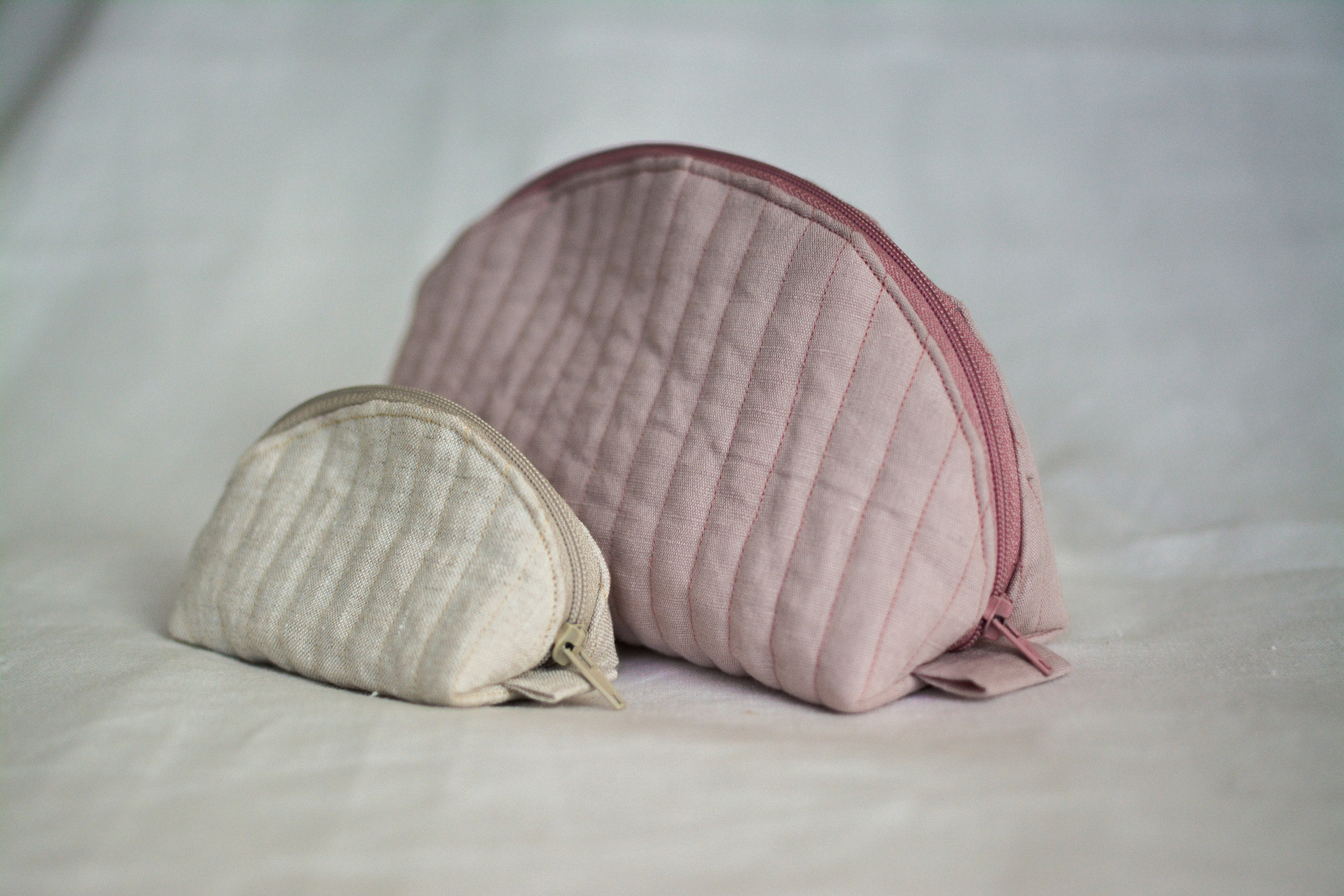
No prizes for guessing why I'm posting about this particular free pattern at the beginning of November (hint: it begins with C). If you're scrabbling around for cute gift ideas for someone who appreciates handmade things, but won't take up a lot of your making time and fabric stash, Pipa The Pouch by Sewing Patterns by Masin is a great option. You can easily personalise them to the recipient and they have a variety of potential uses (make up, jewellery, toiletries, pencil case, small craft equipment, chess pieces, tampons, headphones, the random items that lurk at the bottom of your bag, snacks, I could go on.....). The pattern is accessible when you sign up for the free and not-at-all-spammy Sewing Patterns by Masin newsletter. Shortly after signing up, you will receive an email that includes a link to access the pattern. You can, of course, then choose to unsubscribe to the newsletter at a later date if you with. Big thanks to Jasmin from Sewing Patterns by Masin for sharing this pattern for free. 


Pattern type:

The website states that Pipa the Pouch is a little quilted pouch with a long rounded zipper allowing the pouch to open nice and wide. 

Sizing info: 

The download includes the patterns for two sizes of pouch. The larger results in a pouch that is approx. 21cm across and 12cm high. I didn't measure the smaller one before I sent it off to my mum, however measuring the pattern piece, it would end up approx. 15cm across and 8cm high. You could also adjust the settings of your printer if you wished to make a custom larger or small sized pouch.


(image source: Sewing Patterns by Masin)

Fabric info:


The pattern suggests that Pipa the Pouch will look pretty in any woven, non-stretch fabric. Jasmin's favourite Pipa is made with linen fabric, heavy weight fusible interfacing, and a light weight cotton fabric with flower print for the lining. This pattern gave me the opportunity to dig out some small but very precious scraps of fabric that have been dwelling in my stash for wayyyyyy too long.


The green and white fabric is some 1950s vintage fabric (possibly barkcloth), the last bit leftover from when I used to make bags about twenty years ago. It makes my heart sing and that pouch is for me. The darker, geometric fabric was a scrap that I bought from a screenprinter/lampshade maker over ten years ago. That pouch was sent to my good friends Lee & Jiang in advance of a big trip they're about to make to the US. The floral print vintage cotton was a small hanky-sized piece that I picked up at a charity shop about five years ago. That pouch is also for a friend. And lastly, the small pouch made with a scrap of heart brocade that I found in the scrap bin at work has been sent off to my mum who really liked it when she came to visit.


Because of the limited size of most of the pieces I was using, I had to make a seam along the bottom, rather than cutting the pieces on the fold.


For all the larger pouches, I actually decided to avoid fusible interfacing. Instead, I cut an additional layer of thicker fabric from my stash, which I stitched to the main outer piece around the edge within the seam allowance. There was three reasons for this: 1) I'm trying to use less fusible interfacing in my sewing because I'm worried about the environmental impact of it, so I'm experimenting with replacing it with an alternative when I think that might be an option, 2) I don't have much interfacing left and can't buy more at the moment due to my participation in the Last Sewist Standing challenge, so I want to retain what I have for projects that really do need it, and 3) I wanted to bust more scraps from my stash!

All of them are lined with scraps of cotton lawn or viscose from my stash, and all the zips are also from my stash. I had to use an invisible zip for the small one because I'm running very low on regular closed end zips now too. When I didn't have enough of the outer fabric to make the tabs, I used some grosgrain ribbon that I once harvested from a box of chocolates instead!


Findings:

As you can see, I went on quite the Pipa the Pouch making spree! It was a much needed palette cleanser between garment projects and allowed me FINALLY find uses for some very old but very loved textiles. They're not super quick, but easy enough for a confident sewer to complete one in an afternoon. 

The pattern and instructions are very clear, with helpful diagrams illustrating the construction. The literal only thing I would say that could be improved or updated is the page numbering. The pages of the document are numbered, but the numbering excludes the cover page. So according to the page numbers, the pages with the pattern pieces are 3 & 4. However, because of the cover page, you actually need to print pages 4 & 5. But that's it. 

As you can see, I didn't actually add the row of 'quilting' stitching to my pouches. I tried it on one of them, but I found it distracted from the print too much and ended up unpicking it. It might be a nice addition on solid fabrics however.  


Would I make it again?

Absolutely! This pattern is such a great canvas for small but special pieces of fabric, and the usefulness of this items means you will get a lot of enjoyment from those fabrics. 

Friday, 7 July 2023

Free Pattern Friday: Laminated Toiletry Bag Tutorial


Welcome to my monthly 'Free Pattern Friday' feature, where I road test a free sewing pattern or tutorial: sometimes a children's one, sometimes an adult's one . I publish these posts every first Friday of the month, timed to provide inspiration for those who plan to get their sew on over the weekend. I firmly believe that, if you pick your projects carefully, sewing doesn't have to be a crazy-expensive way to clothe yourself and your family. I also firmly believe that pattern designers deserve to be properly paid for their work, so if you enjoy using a pattern and can afford to do so, make sure you support that designer. Some designers' websites offer the option to make a donation, alternatively you can buy one of their paid-for products. If you can't afford to do so, you can support the designer by sharing your project via social media to help draw more attention to their work. Thanks to all the amazing pattern designers who have offered up their hard work for us to enjoy for free.

Yes!!! I promised that the Free Pattern Friday series would be back around the summer, time and today I'm making good on that promise. Since the last post in the series that I published back in January, I've found a number of free patterns and tutorials that I genuinely wanted to try, to make things that I genuinely think will be useful for my family. Starting with this one! 

Whilst prepping for the Travel, Sustainability and Sewing episode that I made for my podcast with return guest Shams el Din Rogers, I decided to wanted to make a couple of toiletry bags for my family to use for upcoming trips. I was inspired by some awesome bags and pouches that another podcast guest, Rachel Kirby, made earlier this year for her trip to the US. Now, I probably could have figured this out myself. But you know, sometimes you just want to be told what to do! So after some sniffing around, I found this post featuring 40+ Zip Pouch Tutorials on Polkadot Chair, which led me to the Laminated Toiletry Bag Tutorial, also by Dolkadot Chair. Big thanks to them for putting this together for free. If you've got some trips coming up and your wash bag, makeup bag, medicine pouch, or anything-else bag situation isn't looking very strong, you could quickly and easily whip yourself up a new one using fabric from your stash. 


(image source: Polkadot Chair)


Pattern type:

The tutorial is for making a simple, lined, water-resistant wash bag that closes with a zip.

Sizing info:

If you follow the measurements in the tutorial (which are in inches), the resultant bag will be about 24cm wide X 17cm tall (9 1/2" X 7"). A 12" - 14" zip is also required. This makes a small-to-medium sized wash bag, perfect for one person going away for a few nights to a week if they don't use too many products. If you're going for longer, or you want to fit a couple or a family's supplies in it, you'll want to make it bigger. It'd be super easy to change the size and dimensions by cutting the rectangles to your own specification. You can also make a subtle alteration to the dimensions when it comes to stitching the corners by altering the depth.

Fabric info:

The fabrics used in the tutorial are matte laminated cottons, which are probably A LOT softer and easier to sew than the vinyl scraps I had to hand. But sometimes scrap busters can't be choosers. I'm pretty sure mine will be more robust in the long term anyhow. I used some coated vinyl stuff, the kind that's sometimes used to cover tables when kids are around, that was leftover from my rain coat. (BTW, that raincoat was made nearly eight years ago and is still going strong.) Whilst I was hunting through my stash to find the sailboat vinyl leftovers, I unearthed this kitsch, blossom print vinyl that I bought close to twenty years ago! Which meant I was able to make two that could be easily distinguished from each other. I'm wondering if PUL might also work for the lining of these type of bags.


Findings:

If you're looking for a quick and simple tutorial to hold your hand through making a zip pouch, then this one is for you. However, if you'd like to make something a little more refined, with a more pleasing zip finish such as this, then it probably isn't. I'm not sure how viable that alternative, neater kind of zip finish is for this kind of laminated or vinyl fabric anyway, but I might trial that with some 'regular' fabric. Other options include a washbag with an extended zip tape like a lot of shop bought ones have such as this. Or if you'd like a different shape, then something like this or this might be more up your street. 

Generally speaking, the tutorial was easy and pleasant to follow. There was little-to-nothing about this tutorial that made it specific to water-resistant fabrics, other than a link to another post about sewing laminate fabrics, and a link to where you can buy laminate fabrics on Etsy. The one thing I really didn't enjoy about this tutorial, is that it's one of those websites that is dripping in distracting ads. I understand that that is the business model that allows them to offer this content for free, but it still annoys me. 

Customisation ideas:

Off the top of my head, you could:

  • add internal or external pockets to keep ear plugs or something else that's small
  • alter the size, shape and depth
  • use a non waterproof fabric on the outside, and a vinyl, laminate or PUL fabric on the inside only, particularly for a makeup case or other pouch that's less likely to sit in a pool of water!
  • add a label, name tag, decal or embroidery to personalise it or make it easier to return to its owner lost (you may have guessed that I'm thinking of my kids here)

Would I use this tutorial again?

Yes! And I have. I had some seeds that I wanted to send to a friend, so I made her a smaller version of this to put them in. For that, I used the same kitsch vinyl on the outside to keep the seeds away from moisture, but I used a scrap of gingham cotton for the lining. 

Friday, 7 October 2022

Free Pattern Friday: Neck Warmers for All


Welcome to my monthly 'Free Pattern Friday' feature, where I road test a free sewing pattern or tutorial: sometimes a children's one, sometimes an adult's one . I publish these posts every first Friday of the month, timed to provide inspiration for those who plan to get their sew on over the weekend. I firmly believe that, if you pick your projects carefully, sewing doesn't have to be a crazy-expensive way to clothe yourself and your family. I also firmly believe that pattern designers deserve to be properly paid for their work, so if you enjoy using a pattern and can afford to do so, make sure you support that designer. Some designers' websites offer the option to make a donation, alternatively you can buy one of their paid-for products. If you can't afford to do so, you can support the designer by sharing your project via social media to help draw more attention to their work. Thanks to all the amazing pattern designers who have offered up their hard work for us to enjoy for free.

You may or may not know that I recently made a two-part mini series on my podcast, Check Your Thread, about sewing and saving. In it I explored both how sewing might save us money AND how we might save money with our sewing. It soon became clear that two episodes weren't enough, and another specific theme of how we might use sewing to keep us warm started to emerge. You can hear that episode from Monday 10th October. So many people in the UK plan to keep the heating off as much as possible this winter in reaction to the dramatic hike in fuel and energy costs. So I looked at garments, accessories and homeware projects we can create to hopefully keep the chills at bay. In the show notes you'll be able to find all the links to everything I mentioned. 

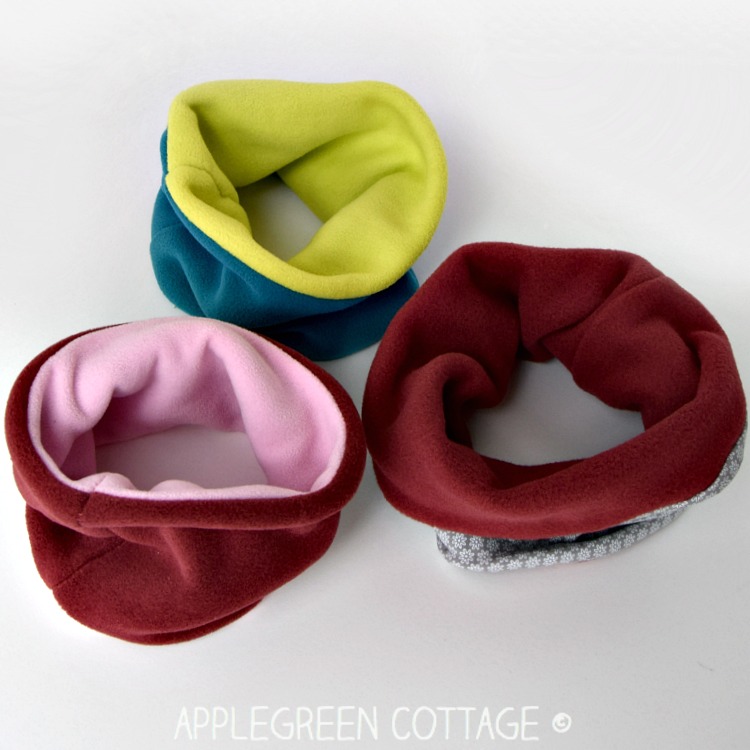
Preparing the episode gave me the nudge I needed to try a project I've had in mind for a while: neck warmers made from upcycled knitwear and sweatshirt scraps. Sometime ago awesome sewing lady Kerry, AKA @kestrelmakes on Instagram, helpfully sent me the link to a template and tutorial that she's previously used with success. It's by Applegreen Cottage, and the tutorial part is in the form of a blog post, but if you sign up their newsletter, you get access to the template (also in the form of dimensions so there's no need to print anything out). Thanks to Damjana at Applegreen Cottage for sharing their work for free. 


(image source: Applegreen Cottage)


Pattern type:

Designed specifically for fleece, this is billed as a basic, reversible neck warmer that is suitable for beginners that can be sewn on a regular sewing machine.

Sizing info: 

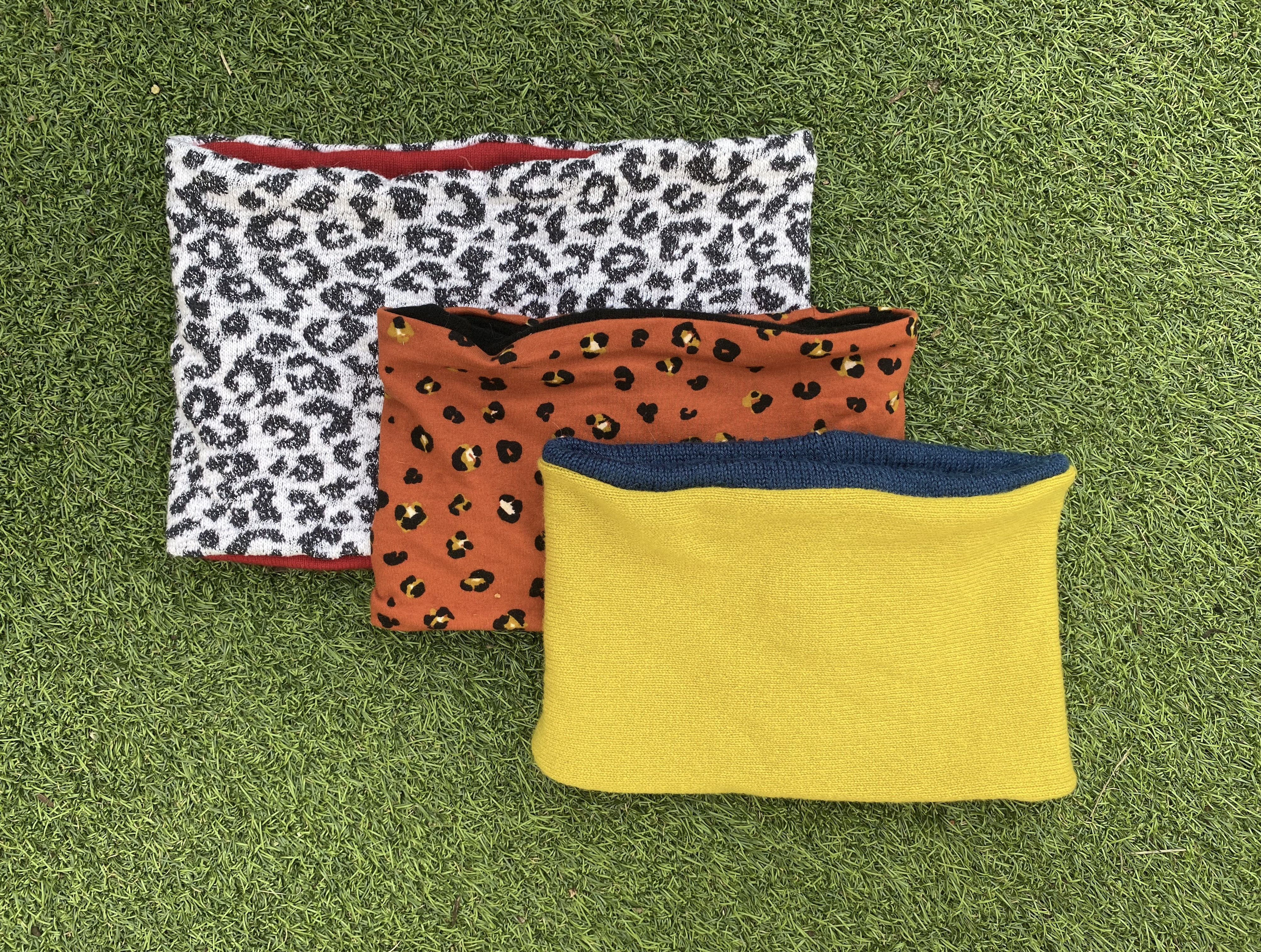
There are three measurements/templates included: Toddler (1T - 3T), Child (4 - 10 years) and Teen/Adult. I made the child size for my daughter (who is nine) and it fits her well. I tried it on my son (who just turned 6) before cutting his out, and decided the Child size would be a bit big, so I made his the midway between Toddler and Child sizes. My own is the Adult size. I haven't managed to get a photo of me wearing mine yet, but it's fine, if a little loose, which I think is related to the just of fabric I used. 


Fabric info:

The supplies list for this project specifies fleece fabric for this project, but one of the versions photographed on the site used jersey for one half which they recommend for not so chilly days. I've been seeking out uses for my stash of moth-eaten and felted knitwear and scraps of sweatshirt fleece, so that's what I used for mine. Plus, I want to encourage people to find uses for their own unworn knits and scraps as a more sustainable approach. In the same vein, I want to discourage people form buying new polar fleece because it is made from synthetic fibres (i.e. fossil fuel extraction plus lack of biodegradability). But if you have some unwanted, tatty fleece garments, this could be a good way to extend the use of the fibres already in existence. 

I encouraged my kids to pick their own materials from my stash. Lola chose a scrap of leopard print sweatshirt fleece and plain black knit harvested from a misshaped old wool jumper. Frankie chose blue knit harvested from a felted old wool jumper of his dad's, and chartreuse knit harvested from a moth-eaten wool jumper I've been slowly dissecting for years. For mine, I used some leopard knit from a damaged jumper donated to me by my friend Ilana, and some red knit harvested from another moth-eaten jumper. I had to cut sections of the red and piece them to avoid the holes. I could have cut it in one piece and stitched up the holes, but moth holes really creep me out. I once discovered a knitted hat that basically disintegrated in my hands due to moth larvae...

Unsurprisingly, the looser knits create more drape-y and looser neck warmers, and the tighter knits (particularly the sweatshirt fleece, and I imagine polar fleece) stretch the least and retain the original dimensions better. 

Findings:

The tutorial is simple and well explained, albeit on one of those blogs that bombards you with ads from ever angle. Getting access to the template was a bit pointless, because the finished dimensions are given in the tutorial, plus the seam allowances, so working out the dimensions to cut for the pieces wouldn't exactly be difficult to calculate, and the download offers nothing else. However, I understand that this is a transaction: free tutorial in exchange for joining their mailing list. 

The finished neck warmers are great and very useful. Both kids wore theirs repeatedly during the chilly week that followed the creation of these. I think they make a lot of sense for kids because they can't get unwound, caught up in some way, or dragged along the floor like kids' scarves so often seem to. I've been wearing mine a lot around the house, which has been great since I got my hair cut short and I can no longer rely on it to keep my neck warmer. 

This project has great scrap busting potential, and I love how you can easily tailor these to the recipient with the choice of colour, pattern, fibre and fabric choice. They would also make wonderful gifts that are super speedy to make. 


Customisation ideas:

  • Alter the dimensions to make them deeper/narrower or looser/tighter. 


Would I make this pattern again?

Absolutely. I'd consider changing the dimensions a bit to either exaggerate the cowl or create a tighter, less draft-y warmer, but I'm already thinking about who I know that might need one of these to get them through the winter...


Related Posts Plugin for WordPress, Blogger...