Showing posts with label Stash. Show all posts

Monday, 10 August 2020

Ankara Roberts Collection Jumpsuit


I've been getting a lot of satisfaction recently from using some of the older pieces from my fabric stash. This African wax print (AKA Ankara) fabric has been in there for at least 8 years, and became many different project in my mind before I actually made it into this jumpsuit. 


Fabric:

To finally get this fabric out of my stash and into my wardrobe, I added it to my #2020makenine plans (which you can see in this post). As Ankara/African wax print fabric goes, this one is pretty stiff, so finding the right project for it had taken me some time. I'd pre-washed it twice to see if it would soften up, but I think that's only going to come with lots of wear and the sporadic washes it will receive over (hopefully) years. 


As you can see, this fabric as a bold, large-scale print. I had quite a bit of it, but full-length jumpsuit patterns are hungry for fabric, so I didn't have the luxury of trying to match sections of the print at any point. I think the random-ness and resultant placement looks fine though. 


Pattern:

I've been in love with the Roberts Collection pattern by Marilla Walker for yonks. You get a lot of bang for your buck with this one, as the pattern includes a jumpsuit, dungarees, pinafore and top patterns. I finally decided to buy it in paper form from Fabric Godmother just before lockdown. 

(image source: Marilla Walker)

I traced the pieces for the jumpsuit off as I wanted to retain the original. I knew I'd been making some adjustments, plus you never know if you'll need a different size somewhere further down the line. Firstly, I altered the shape of the back pieces, to change the inverted V-shaped seam (see the line drawings below) into a regular, straight waist seam. I always have to remove length from the torso of tops, dresses and jumpsuits, and even though I then folded out 2cm from the front and back pieces to account for this, I wanted the option to add some length back or remove more length, should a mid-way fitting deem it necessary. 

(image source: Marilla Walker)

Thoughts:

I was hoping that the unfussy, casual style of the pattern would prove a suitable canvas for this intense print, and overall I think it just about works. There's a slight vibe of sleeping onesie/pyjamas about it, but that doesn't bother me at all. I could have positioned the lowest button slightly higher, which I would alter next time. Plus there's something slightly off with the fit around my bum (it often needs readjusting after leaning forwards) but it's not a major issue, and I reckon I could sort that out for future versions by comparing the rise of this pattern with the rise of the Heyday dungarees pattern. Ultimately though, I'm very happy with this make and wearing it is a lot of fun. I've got more older-stash items busting to share with you soon. 


Friday, 12 July 2019

Turquoise Ginger Jeans: Lounge Camouflage


It wasn't until I came to resize these images, that I realised just how similar my new jeans are to the colour of our lounge wall! However, this is the only decent spot in our flat for taking photos, plus if you'd seen how many toys I had to clear out of the way to get these pics, you'd understand why I'm not going to re-shoot them. 

Pattern:

Maybes you remember my first crack at the Closet Case Patterns Ginger Skinny Jeans pattern? Well those have been worn sooooo often, that I knew another pair would be in the pipeline before long. What I have found with my first pair though, is that the low-rise option (view A) really is low. I wouldn't feel decent wearing them without a vest (AKA camisole/singlet) tucked in to them, especially if I planned to sit or bend down. That's fine for the three quarters of the year during which I wear vests, however I wanted my second pair to have year-round wearability. My feeling was that the high-rise option (view B) of the original Ginger jeans pattern would have been too high for me, and I considered buying the mid-rise version until my friend Paula told me that Closet Case had generously published a blog post with a tutorial for drafting your own mid-rise version. Let's do this!
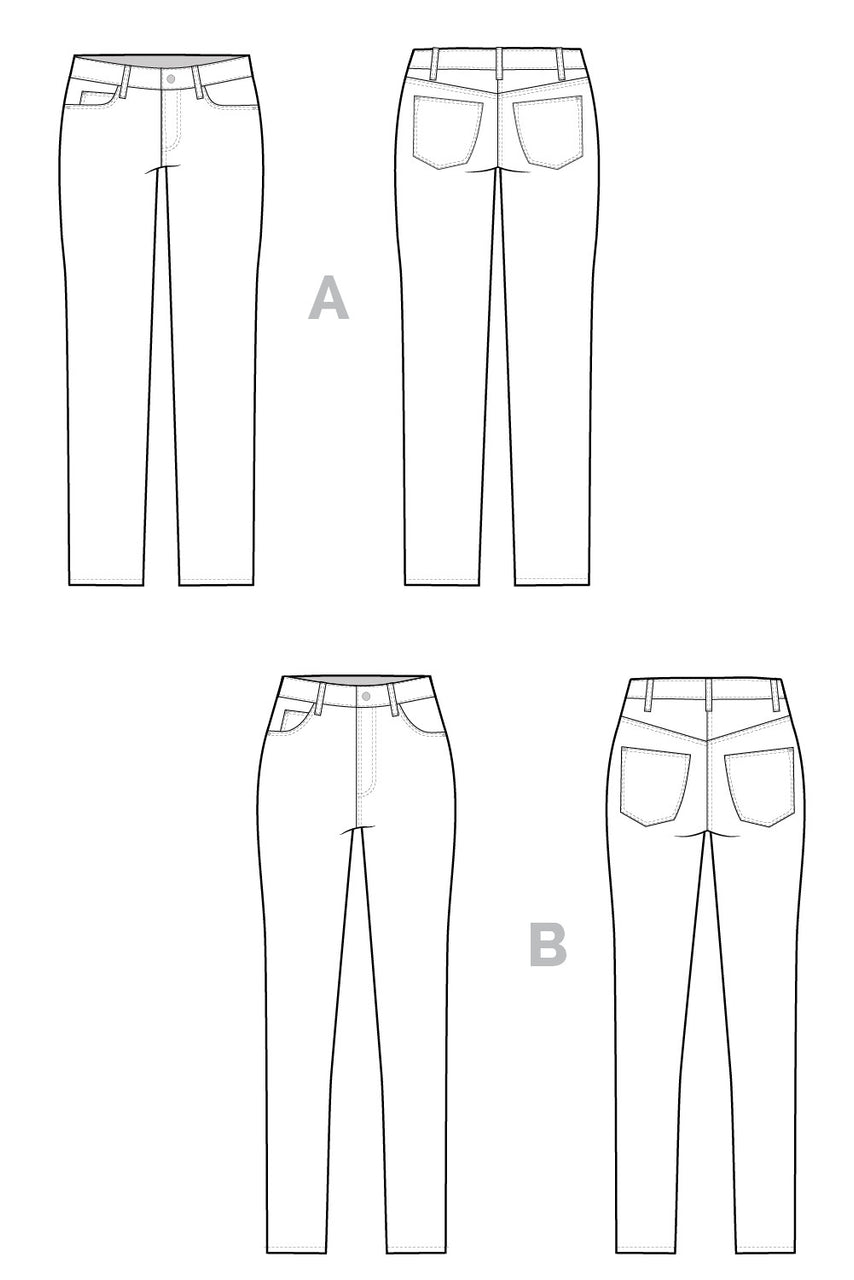
Ginger Skinny Jeans pattern // Technical flats // Closet Case Patterns
(image source: Closet Case Patterns)

To draft a mid-rise pair, it is suggested that you start with the original high-rise option (view B), as the proportions of the pockets and such are more suitable. I chose to make the rise exactly in between the views A and B. I took some additional body measurements to find out what I measured around the waistband of my view A pair, and what I measured around where I intended my new waistband line would be. That different of measurements was very useful when following the steps in the post. I should point out that Closet Case's tutorial doesn't include shortening the fly piece, which does need to be done. 


I'm not the first to say that each time you make the Ginger jeans, or any pattern that uses a fabric with some stretch content, it's important to have a mid-way fitting sesh. Even if the fit on your last pair was perfect, each stretch denim will have slightly different properties so can't assume your next pair will also be spot on. I was relieved that, after all that pattern tweaking and the different denim, the fit of my second pair before I attached the waistband was great. After I tacked the waistband on, I tried them on again, but found them too tight at the waist, so I unpicked and reapplied the waistband,  easing in some extra length. 

One fitting note that I didn't discover until they were all finished and being worn, is that I think they are too wide around the ankle. You can see it pretty clearly in these pics. At the moment the weather is pretty warm, so I'm wearing them with the hems rolled up a bit. However, when it cools off and I want to cover my ankles up again, I'll unpick the hem and take some of that width out from the side seam. 


For the topstitching on the back pocket, I used one of the downloadable designs that you can access from the Closet Case Patterns site when you sign up for their newsletter. I transferred the design to the pocket pieces using white carbon paper and a tracing wheel, and I'm soooo happy with how they came out. I would definitely recommend the designs that use straight rather than curved lines for getting a clean result.  


Fabric and Interfacing: 

If you recognised that this turquoise denim was one of the nine pieces of stash fabric I pledged to use up in my #2019makenine plans, then you get a million points. This project is my fourth completed project for that challenge, although a lot more sewing has been happening that aren't part of those make nine plans. This fabric is some turquoise-y stretch denim that I bought from Fabric Godmother a few years ago. Since buying it, I'd fallen out of love with it, but now that it's made up into a garment that feels good to wear, I'm a fan again. The elastane/Lycra content must be pretty high, because it has a kind of synthetic-y sheen, but because of that content, it feels like I'm basically wearing leggings rather than jeans. 


I had a long debate with myself about what to use for the facing and interfacing for the waistband. Feeling comfortable, particularly round my waist is of MASSIVE importance to me, and can totally dictate whether or not a garment I've made ever gets worn. I can't remember if I used interfacing on the waistband of my first pair of Gingers, however I used a non-stretch woven cotton for the waistband facing, so that waistband basically has no give. However, due to the fact that that pair sits so low, I still find them comfortable to wear, as long as I have a belt to stop them heading south.   

But because this second pair were going to be sitting higher up, closer to my natural waistline, I wanted to ensure more give so that I wouldn't feel constricted. I decided to use the same stretch denim to face the waistband, plus I applied fusible interfacing for knits to the waistband piece itself. The result is a pleasingly stretchy waistband that definitely does not feel constricting. Howevs.... they do start to migrate down a bit whilst they are being worn. I'm wearing a belt with them to counteract this, which slightly nullifies the point of a stretchy waistband. Any thoughts?!


Oh but wait! Did you see my pocket bags?! I got to use up an awesome remnant of quilting cotton that I'd bought from Ditto in Brighton yonks ago. It's got a cute 1950s kitchen print which is kind of at odds with a pair of turquoise skinny jeans, but I think that makes me like the combo even more. 

Thoughts:

You've probably already gathered that I'm really into this me-made! I promise to dig deep and sort out the excess width around the ankles so that I'll like them even more. I find jeans making sooooo satisfying. This year's Me-Made-May challenge taught me that a pair of black skinny jeans would be a useful addition to my wardrobe. So when Autumn hits, I'll keep my eyes peeled for some great black stretch denim and use this pattern exactly as it is for those. 


Thursday, 15 November 2018

A Year of Stash Busting, PLUS: Dutch Label Shop Discount Code


It’s been over a year now since I begun to really definitely actually start busting my fabric stash. I wrote about my plans back in March of this year to sew up one piece of fabric or reusable garment each week, but I'd actually started the previous October. Are you interested in finding out how I’ve got on?! Well, I'm pleased to announce that, yes, I HAVE managed to keep up with this challenge! Some pieces became time-consuming projects, others became swift and satisfying makes, like these four pairs of leggings for my daughter that illustrate this post. All of these leggings/jeggings were made using the free leggings sewing pattern by Petit Boo that I reviewed here by the way, and have all these pairs been worn many times since they were completed.


Truth be told, not all of those 52 pieces of fabric or garments came straight from my stash. My stash is big, but not so big that it contains a piece of every type of fabric I might like to sew with! So I have been purchasing new pieces of fabric here and there, but only with a specific project in mind, and very often for a specific pattern that's in my possession. This accommodation has worked well, because I have been turning lots of my languishing pieces of stash into useful garments, but I haven't felt frustrated because I wasn't confined to only using stash pieces this past year.


Using one piece of fabric or reusable garment per week may sound a lot to some, and you may be concerned that I have been sewing for the sake of it, or that a lot of this output ended up not getting worn. Thankfully, I've kept a list over the last year of everything I've used and what it became so I can address these concerns. Out of the 52 pieces used, only seven were a FAIL (and subsequently were given to a friend, sent to the textile recycling bin, or put back in the stash to reuse the fabric), the rest of the garments I've made have seen a good amount of use. Obviously I have reached for the pieces of stash that I've felt most inspired to use when the right project came to mind, so things may get trickier the deeper into my stash I rummage. But not allowing myself to buy fabric on spec means that I have given each purchase or acquisition of new fabric a great deal of thought, which has reduced FAILS considerably.


Truth be told, there's still a lot of fabric and reusable garments in my stash, but visibly less than this time last year. My sewing time may dwindle a bit in the future as a number of different activities and projects I'm involved in are going to start taking up more of my free time. However, for the foreseeable future, I'm going to continue with my one-piece-per-week challenge, and see how much more I whittle down my stash by creating fabulous and useful garments.


Stash busting update over: on to the discount code! Recently, the Dutch Label Shop generously offered me some store credit for their website to order myself some woven garment labels in exchange for a mention on my social media. Coincidentally, getting some new labels for my family's clothing was on my mind at the time, having just stitched tons of onto my daughter's uniform as she started school this September. The labels I had been using for my daughter's clothes were ordered through Etsy and are very cute. However, I've found that the printed design fades extensively when laundered, so I was musing on acquiring some woven labels to use instead. 

I spent an AGE playing about on the Dutch Label Shop website, designing and redesigning with their pleasingly user-friendly label designing function. Even sticking to the 'Basic' woven label option like I did, you can choose different sizes of labels, different colours for the background and text, different fonts and from hundreds of little logos. I particularly like how clearly you can see how much the different combos of elements will cost you for different quantities before you continue with the ordering process. I managed to make my store credit extend to four different sets of labels. Ta dah!!!!


Cute, non?! I LOVE them, and they make the garments I stitch them into look extra professional (see the My Little Pony leggings above). If you would like to design and order your own garment labels, you can get 15% using the code sozoblog15 (all lowercase) when prompted during the ordering process. This code will be valid for 60 days so you've got a couple of months to go and design yourself some adorable labels, starting from........NOW! Happy label designing!

Thursday, 15 March 2018

Busting My Stash. No, Really. I Mean it This Time.

(image source: Time To Sew)

In my recent post about the unsustainability of sewing, I made the argument that it would be difficult to describe sewing as a sustainable activity, and certainly not the most sustainable way to dress ourselves. However, I did go on to list a number of ways in which us sewers/sewists could make sewing more sustainable. Essentially, all of the ideas I came up with lead towards the goal of making clothes that should last you for years because, A) they fit you perfectly and, B) are styles you love to wear that fit with your lifestyle.

But in writing that post, I forgot to discuss something else that thankfully the ever-awesome Sarah from Fabric Tragic brought up in the comments: the over consumption and hoarding of fabric. I'm pretty embarrassed to have forgotten to include that topic in my post as it's something I think about A LOT. Like, A LOT.

Currently on Instagram there's a hashtag/call to arms doing the rounds called #makeyourstash. It was started by @timetosew and @pilar_bear to encourage sewers to use a piece of fabric that has been in their stash for 6 months or more. They are publishing some accompanying blog posts and initiating stash-related discussions on IG, including recently asking 'what's your ideal stash?'. I think it is a fantastic and worthwhile idea, and by the looks of things, they have already encouraged a lot of people to make stuff from what they already own. Trying to encourage other members of the sewing community to use their fabric stash is not a new idea of course (and I'm not suggesting that the creators of this one think that it is); there's been a whole host of stash busting initiatives within the sewing community over the years. I even made my own silly little logo a squillion years ago in an attempt to encourage people to bust their stash. But I'm grateful to Kate and Pilar for taking up this mantle again, and doing so with a fresh and accessible approach. I think these are important things to think about and discuss.

So what's so bad about having a large fabric stash? Personally, I feel the over consumption of fabric is as damaging as the over consumption of any other manufactured thing. The environment is being irreversibly screwed over, in part because those of us in developed countries can't seem to quench our thirst for new stuff. We've got to slow down in all areas of our consumption, including the fabric us sewers/sewists are secretly, or not so secretly, hoarding.

Me? I've got a sizeable stash just like almost everyone else in the sewing community and to me it feels like an uncomfortable amount to own. I'm definitely not sitting here having figured it all out, but I am finally starting to take some steps towards getting my fabric stash under control, and therefore more representative of how I am trying to consume stuff in other areas of my life. So, what am I doing about it?

  • First up, I'm being honest. Towards the end of last year I pulled all my fabric out (again), refolded it (again), and counted what's there. At that time I had about 80 pieces of fabric and about 20-30 refashionable secondhand garments, plus I've already purged my stash of anything I don't like or can't see myself using. Gulp. 
  • I've arranged my stash so that it's easily accessible and (mostly) all in one place. Shortly after we moved into this flat about 18 months ago, I got a handyman to come round and build me an extra shelf in our airing cupboard for it to live on. I sorted everything into three sections: wovens, knits and refashionable garments (plus a carrier bag full of lining fabrics and pieces destined for toiling). Now everything is more or less eye level and I can see what's in there with ease. I can remember what I already have more easily because I've seen most of it recently. I must admit that my scraps-and-small-pieces tubs are currently in another room, but once my main stash gets whittled down a bit, I want to put those tubs on that shelf too. 
  • I'm only buying/acquiring fabric if I am sure what type of garment (and very often which  precise sewing pattern) I want to make with it. A stash busting purist would probably put themselves on a total No New Fabric ban, but I know that that approach would leave me feeling frustrated and uninspired, which is the opposite of how sewing is meant to feel and would negate sewing's benefits to mental health. I did a bit of a personal style-180 a couple of years ago, and without making any additions to my stash, I wouldn't have been able to re-stock my wardrobe with clothes that represent who I am nowadays. 
  • Noting down the potential fabric/pattern pairings I've come up with has been essential for getting those garments out of my brain and into reality. Some people use apps like Cora and Evernote or even spreadsheet files to keep track of their stashes. Personally, I have a simple list on my phone which I look at, add to and edit pretty regularly. With a pool of potential projects lined up, it's fun to take a peek and decide which I'm most excited to tackle next, or which garment I'd like to have available to wear the soonest. 
  • I like a challenge to give me some momentum, and whilst I DO NOT condone rush sewing or sewing just to use up stash, I have been committed to using up one piece of fabric per week for about 20 weeks now. This idea might horrify some sewers, but I promise that I'm only making things that I really want to wear (or want my children to have) and I'm not skipping on careful project planning and the other steps that will up my chances at creating a successful and long-living garment. 

I'm confident that, even if my current well of sewing time dries up a bit, I'm on track to get my stash to a size and state that I'm much happier with within a year or so. What about you? Are you happy with your stash as it is? Have you tried, or are you currently trying, to implement ways to reduce it? Or does that sound absurd or counter-productive to you? I'd love to hear your fabric stash-related thoughts.

Wednesday, 20 July 2016

Tame Your Fabric Stash!

(image source: Cora)

For anyone who is interested in taming their fabric stash, help has arrived! I've been a bit out of the loop recently due to moving house and Dolores deciding she no longer needs to nap, so I have no idea how widely reported the new fabric stash app, Cora, has been amongst the sewing community to date. So I'm going to pretend that you haven't heard about it yet. Its developer, Hélène Martin, contacted a number of sewers including myself earlier this year about her new fabric stash app project. She was asking if we had any ideas about what we'd like from such a thing, and also if we'd like to trial her beta version. Well, trialling, feedback and a couple of rounds of updating have now taken place, and now it is on sale for use on iPhones, iPods and iPads for $6.99.

I'll be honest, if I hadn't been offered the opportunity to play about with it for free, I probably wouldn't have bothered. Although I love the idea of getting my stash into some semblance of order so I can get some serious stash busting done, I'm not the most technically minded and pretty time-poor these days, so I might have assumed that it wasn't worth investing the time to working it out. If that scenario had played out then it totally would have been my loss. First up, Cora is SUPER easy to use, barely any investment in time was required to get it up and running even though I'm in no way an avid app collector or user. And secondly, I have genuinely found it to be awesome in a number of ways.

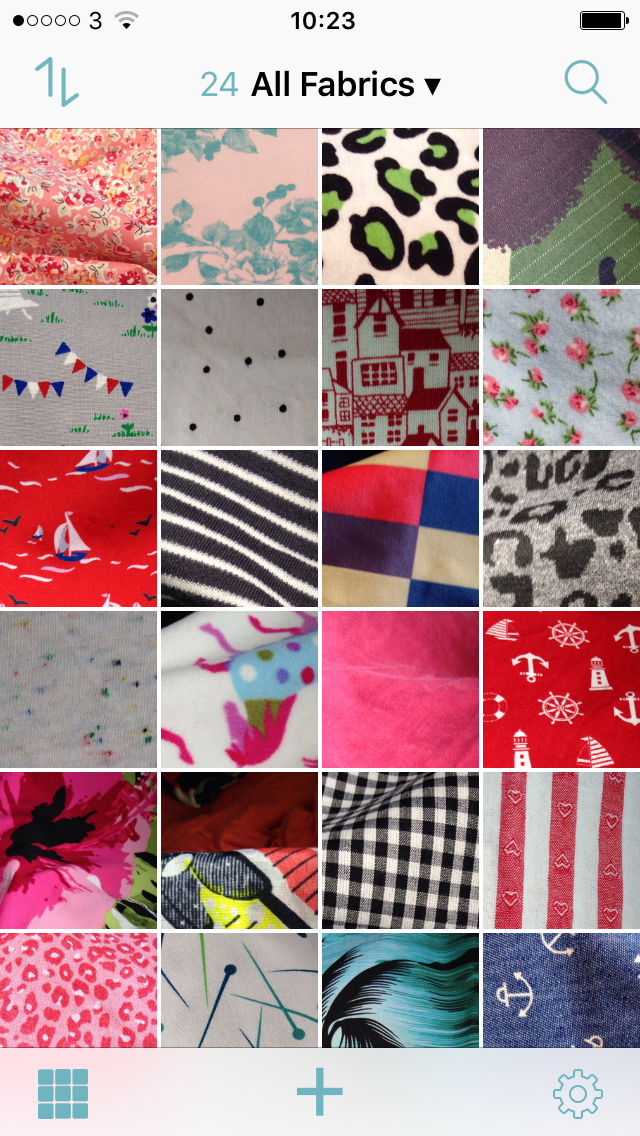
But I'm getting ahead of myself, I should explain a bit more about what Cora actually is. This app allows you to catalogue your lengths of fabric by taking a photo and inputting information about them like width, length, if it's pre-washed, fibre content, main colour and lots more. All the info you add, as well as being potentially useful references, can also be used as filters to help you search through it all. You can add a lot of info (including super detailed stuff like where you bought it and on what date) or barely anything if the visual is the most important thing for you, and I really like that you can add 'Notes' on each piece which I have been using to add a reminder to myself about what I intended to use each piece for. Aside from knowing how much I have of the damn thing, remembering what I had planned for it is my biggest stumbling block when trying to use my stash.

(A tiny chunk of my fabric stash. Don't judge.)

I'm not going to lie, the initial inputting of your fabric is a bit time consuming. But once it's in there you can update it easily, for example, if some of it gets used or you have a new idea for what to do with it. Whilst I was packing up my fabric stash for my recent move I added about one bin bag's-worth of fabric into the app, which took quite a while and only amounted to 24 pieces (see image above), about one tenth of my total stash of fabric, scraps and refashionable garments! However, I'm some happy to have those catalogued, and I regularly go into the app to look at them and mull over what they should become. Even with that small chunk catalogued (along with recently having to pack and unpack it all!), I feel much more in touch with what fabric I own.

I can imagine that many people might find the app useful when shopping for sewing patterns to see if they already have something suitable to make it in. Me? I'm finding that it's making me feel more accountable for the vast amount of fabric I own, even though I've only catalogued a small section of it so far. If I'm serious about busting my stash and deploying the lovely pieces I own to make useful garments for myself and my children, then I have to actually start using the damn stuff. And I really think that this tool will help me actually do that. Currently, the app doesn't have a function for telling you how much you've used up in a given period of time, but just knowing that I have 24 pieces of fabric catalogued is making me think that I need to use at least two pieces of stash fabric per month if I'm ever going to make the smallest dent.

As you may have noticed, I feel pretty strongly about everyone, myself firmly included, using existing materials where possible over buying new stuff every time in every aspect of life. I just don't think our planet can support the level of consumption of goods and materials that most Western people (once again, sadly, myself firmly included) are currently engaged in. And fibre growth then fabric production, processing, dying and transportation is a real damaging industry. Aside from being heaps of fun, I really hope that this app will help many of us who like to sew to increasingly turn to what we already own more often than we currently do.

What about you? Have you tried Cora? Do you have any other successful method for tracking your fabric stash? If so, are you diligent at updating it? How has tracking and/or cataloguing your fabric stash altered your relationship to it?

Monday, 18 January 2016

Scrap And Small Piece Busting

(my 'collection' of woven scraps and small pieces)

Do you ever feel like you are at risk of drowning in fabric? That's how I'm feeling at the moment. I'm not talking about the (relatively) nicely folded, garment-sized pieces that live on my set of shelves. I mean all the bits that are left over from completed projects that are too nice to chuck in the textile recycling bin, but too small to make much from.

I have one sizeable tub for scraps and small pieces of woven fabric, and another for knit, that are meant to stack up neatly next to my sewing table. Except they don't. They are now too full to stack neatly, and are over-flowing onto the floor. I'd estimate they currently contain (and I use that term loosely) double their suitable volume of fabric and it's time to do something about it. I don't mean that negatively: these tubs are full of really lovely fabric that deserves to be turned into things that will be loved and used. Perhaps you too have a similar treasure trove to mine.

(knit-ageddon)

I am NOT planning on or advocating making stuff for stuff's sake just to reduce the volume of scraps and small pieces. I've seen a bunch of links on Pinterest to lists of projects designed for using up scraps and most of them seem to me like an utter waste of time and fabric-potential. I'm talking about making great stuff that will see lots of use and enjoyment, but might require a tiny bit more thought than if you were to cut into a fresh piece of adult garment-sized fabric. It's an extension of the points I made in my Sewing When Your Skint post: finding the value in what you already own to make the kinds of things you really want to make.

I've been giving it some thought, and aside from kids clothes (more on that in a bit), here's what I'll make a more concerted effort to use it for:
  • contrast pocket bags
  • contrast facings (always makes garments look fancy, eh?)
  • bag linings (the Anya shoulder bag, for example, only requires 35cm of lining fabric)
(image source: Emily's Three Things)
  • headbands (I'm wondering if I could rock a headband like the one pictured above whilst my fringe grows out)
  • vests and pants (someone messaged me recently saying that they use my pants pattern to squeeze a pair of pants out as well whenever she's cutting out a knit garment)
(image source: Making Ends Meet)
  • cloth sanitary pads (yes, I am genuinely considering trying this. Call me a big ol' hippy if you wish. You can't argue that they wouldn't get used!)

And of course, if you have children in your life to sew for, little clothes, bags and toys are a great uses for smaller pieces of nice fabric. Things I plan to sew for Dolores and her friends include:


(image source: Kixx Online)
  • vests and pants (I've got both kids vest and pants patterns in one of my copies of Ottobre magazine to try, but panelled pants like the ones pictured lower down in this post would mean even smaller pieces could be used)
  • dribble bibs (Dolores is still a heavy dribbler, even now she's two. Plus, some my friends are busting out  new babies in the next few months)
(image source: Dana Made It)
(image source: Swoodson Says)
  • beanie hats (I'm going to check out this blog post (pictured above) for the low-down on some freebie pattern options)
(image source: Purl Soho)
  • skirts (skirts can be as fancy or as simple as you like I guess! This gathered version pictured above would take so little time to make, it's the clever colour combo that makes it pop)
  • patchwork duvet cover (Dolores is still in a grobag/sleep sack at night, but before long we'll have to upgrade her to a duvet set. I'm thinking about making a basic patchwork duvet cover when the time comes)

And when the scraps and pieces are too small to cut even a child's sized garment out of it, there's always combining, panelling and colour-blocking to make the most of the hoard. Here are some images I collated via Pinterest that are inspiring me in this fashion:

(image source: Boden)

(image source: c'est bien fée

(image source: groovymama via Burdastyle)

(image source: Upcraft Club)

(image source: Boden)

(image source: thatdarnkat on Etsy)

(image source: Delia creates)

(image source: Craftaholics Anonymous)

(image source: Sloppop Yeah)

(image source: Une Rose Sur La Lune

(image source: The Chriselle Factor)

(image source: Carolyn Friedlander)

(image source: Blune)

(image source: Shwin Designs)

(image source: Boden via Nordstrom)

(image source: Zulily)

(image source: Sloppop Yeah)

(image source: Boden)


I would love to hear your thoughts. How do you make good use of your scraps and small pieces? 
Related Posts Plugin for WordPress, Blogger...