Showing posts with label organic cotton. Show all posts

Wednesday, 16 September 2015

Small World Louisa Dress. Plus: Zip Query


A child's garment in my mind should be a relatively quick undertaking. This one was not. My goodness, this dress felt like a long time coming. From printing out the pattern to finishing the final seam probably took about four months, with other projects working alongside it, of course. But! How cute! Let's discuss...


Pattern:

I was waiting for a good excuse to buy the Louisa dress pattern by Compagnie M, and then Anna from Paunnet blog offered up a discount code as part of a blog tour for this very pattern, so what was a girl to do? I've seen about three thousand amazing versions of this pattern on the interwebs (and pinned most of them), in fact I'm not sure it's possible to make a rubbish, or even a 'meh', one. If I were to dissect what I like about this pattern, I would have to say that it's the following elements: simple A-line silhouette, feature buttons, piping and the possibilities for contrast fabrics. 

Having made it, I am still in love with all these elements. However, what I wasn't expecting is just how many damn pieces it requires! The PDF format results in a sizeable layout (for a children's garment) which requires some hefty taping together. And then you have to trace each piece out as they are overlapping each other on the layout, I guess to prevent using up a whole forest each time a copy gets sold. I must admit, I stalled on that part a bit as my limited evening-time energy could only take me so far.   


Having made it, I would argue that the Louisa dress is a deceptively simple garment. It involved a lot of construction steps, not least because I made the fully lined version. If I'd picked the panelled or split back options, it would have involved even more pattern pieces and construction steps. But that's just me having a moan. It was a fun project, but I would advise anyone going into it not to expect a completed garment after four hours of making it for the first time. Unless you are a sewing ninja.

I made the size 2, expecting that it'd fit Dolores this Autumn (she's 2 in a couple of weeks, WHAT?). However, it's come up considerably bigger. I'm not sure she'll be wearing it much before her third birthday, which is a shame because now that she is able to name almost every picture on it, she's currently very entertained by the fabric. Speaking of which... 


Fabric:

I was kindly given a metre (could have been 1.5 metres now I think about it) of this amazing organic corduroy by my blog sponsor The Village Haberdashery, where I also teach. The design is called Small World, and is one of the designs by amazing sewing lady Rae Hoekstra that is part of a collection which is also called Small World. The fabric is produced by Cloud9 Fabrics, and if you want to buy new fabric, I'd recommend their wares as all their fabrics are 100% certified organic and they have high ethical standards of social as well as environmental practices. 

Previously, the only organic cotton fabrics I'd sewn with were interlock knit and quilting-type wovens. I was excited to give sewing with this fabric a whirl, because organic corduroy doesn't seem to be common place. It didn't disappoint. It's such a lovely, soft, fine, needle cord, perfect for children's wear and really easy to sew with. 

I used some turquoise habotai silk for the lining from my stash, where the red piping and red buttons also came from. The only thing I bought for this project (aside from the pattern), was the zip. Boom.


Thoughts:

The cuteness levels of this dress are high. Although sadly, as much as I love the style and its potential for different variations, I think this pattern is a bit too involved for me to use over and over again. But having traced all those pieces in the size 2, I may make another at some point next year to have made the investment of money and time spent taping and tracing worth while. Next time, I'll probably make a summer version and draft a neck facing, omitting the need for lining which should speed things up a bit. 

Now here's my query: how do I avoid this crinkled effect around my invisible zip? Any ideas why this  happens sometimes? I'm sure I'm not alone in ending up with this effect on occasion. Would using a lightweight zip eliminate the crinkling? A good steaming with my iron did nothing to help. I'm not too bothered about it with this particular dress, because I doubt Dolores will stand still long enough for it to be very noticeable, but I'd like to avoid it going forward... Thoughts please!!!!!

Wednesday, 15 July 2015

Organic Cotton Paris Jersey Dress


Here's a cute dress that's been waiting in the wings to be blogged about. I'm pleased with it for lots of reasons, which is a relief because making garments that require you to trace the pattern pieces first takes a level of effort that isn't always easy to come by! 


Pattern:

The Autumn 4/2013 edition of Ottobre magazine (pictured above) is one of about three that I own that have now justified their price several times over. I've already used several of the patterns from this edition and have ear-marked more for when Dolores grows into the next size range. 

So what did I use from it this time? I was for looking something to make from some lovely organic printed jersey that I'd been sent (more on that in a bit). I delved into my expansive Kiddie Clothes Making Pinterest board for inspiration and found this dress pin (from a pattern by Too Sweets patterns on Etsy). It's kind of like a set-in sleeve version of the Field Trip dress I made, but with a more A-line shape. So I started hunting through my Ottobres looking for a basic T-shirt pattern to adapt when I came across the Circus Horse dress (pictured below) from the aforementioned Autumn 4/2013 edition. It has almost the exact silhouette that I was looking for, however it has raglan rather than set-in sleeves. Instead of faffing about adapting another pattern, I decided to go with the Circus Horse dress instead. 


I made the smallest size (92) which is currently one or two sizes too big for Dolores, but as I've said many times, I'm pleased to have garments for her 'in the bank'. I'm not sure when she'll get to wear it exactly, but I'm hopeful that it'll have a pretty long lifespan. I also added 2cms to the length as she tends to be a bit skinnier than the Ottobre patterns are designed for. I'm hoping that when it no longer works as a dress, that it'll become a tunic to be worn with leggings. 

It was pretty simple to put together, although I complicated things slightly by adding some red jersey piping to emphasise the raglan sleeve seams and break up the print a bit. I used my twin needle on the neck binding and cuff binding, and they look pretty profesh if I say so myself (from the outside at least!). 


Fabric:

Back in March-ish time, I was contacted by myfabrics.co.uk who offered me a choice of free fabric to sew with and review. I took it as an opportunity to further my investigations into organic cotton: to find out what is available out there for home sewers and what it is like to sew with. They had a few organic options on their site, mostly solid coloured jerseys and two novelty printed options. I requested some of the printed stuff as it looked really fun, and they kindly sent it to me (and have been incredibly patient with me and my much-delayed review).

When I received the fabric, I was immediately taken with the softness and handle, but a bit disappointed with the colours of the print. In the flesh they weren't as vibrant as the thumbnail on the site. I can't link to it because it is not currently available, although they have many MANY other amazing non-organic novelty printed jerseys currently in stock. WHY AREN'T THE ANCHOR DESIGNS PRINTED ON ORGANIC COTTON?! Riddle me that. 


This organic cotton jersey was lovely to cut and sew with, and the weight is perfect for a jersey dress, but also probably for a T-shirt or leggings. The softness that seems to be a feature of (all/most?) organic cotton is ideal for children's clothing, and the 5% elastane content in this particular piece should aid stretch-recovery and movement for a crazy toddler. I can't comment on how it launders after repeated use, because this garment is still too big (as highlighted in these last two photos!) and it hasn't needed to go through the wash yet.

Thoughts:

As far as I can tell from a garment that is yet to be in regular rotation, this seems to be a real success. I love the pattern AND the fabric, and I guess it's in the eye of the beholder as to whether they are a good pairing. I definitely plan to use the pattern pieces again, and maybe make 3/4 length or short sleeved versions as well in lighter-weight knit. 

And when my stash has run dry of knit, and if the charity shops aren't turning out viable garments to harvest it from, I'll definitely consider buying organic jersey/knit fabric in the future. Although I'll make sure it has the GOTS (Global Organic Textile Standard) certification so conforms with standards at every stage of manufacture.  

Monday, 15 June 2015

Organic Jersey Anchor Yoke T-shirt


The last few months have been really productive for me, sewing-wise. I've been making time to sew almost everyday, as I've figured out that I really need to do so for the benefits on my mental health. But with all the Me-Made-May'15 documentation posts and the celebration giveaways recently, I have ended up with a bit of a backlog of projects to share with you, all along with other stuff I want to post about. So I better get on with it... 

Here's a top that you would have seen briefly if you'd read my Thoughts on Organic Cotton post. It's the second garment that I squeezed out of the metre of maroon organic jersey that was sent to me by Only Organic Fabric Shop (the first being a pair of ruched leggings). 


Pattern:

The children's wear editions of the Ottobre magazines are so awesome for knit patterns. This is the Autumn Forest jersey top pattern from the 4/2014 edition of Ottobre magazine, and although the version photographed in the magazine was made in all the one print, it is ripe for contrast details. I think this pattern could be made in so many different ways, and end up looking totally different each time, which is one of the things I look for when deciding which pattern I can be arsed to trace out. Plus, with this specific pattern you could easily shorten the sleeves or lengthen it into a dress. 

The other reason why I decided to try this pattern was that the silhouette looked pretty skinny, as is Dolores. Recently I've started combining sizes on garments for her as a matter of course, using one size for the width and the next size up for the length. But I went for the straight Size 86 (the smallest for this pattern) as it already seemed to reflect her proportions. Perhaps the line drawing (pictured below) is meant to represent the larger sizes which are graded to get considerably longer but not much wider than the smallest, or perhaps the drawing is just not that accurate, as the finished garment (see the picture at the top of the post) is not as skinny as the drawing suggested it would be. I'm sure it'll fine though, it's the same proportions as most of the secondhand, shop-bought long sleeved T-shirts she already owns anyway. 

I'm also a tiny bit disappointed that the gathered front section isn't as gathered as the drawing indicates it would be. I may slash and flare the pattern out for a bit more fullness for next time. Alternatively, I may concentrate the gathering into a smaller distance so it ends up a bit of a bolder feature.  

This top is still too big for her really, right now she's more of a Size 80. I just wanted to try it on her and get some pictures, and I think that including some modelled photos in a blog post where possible is always more fun. 


Fabric:

As previously mentioned, the maroon cotton jersey was given to me to review, and I did so pretty thoroughly in the ruched leggings post. I deliberately made a garment that could be worn immediately (the leggings) so I could find out quickly how this fabric copes with multiple wearings and washes, and another garment that is too big to have in the 'bank'. This cotton jersey is beautifully soft and fine, a great fabric for making children's wear from. 

The contrast anchor fabric that I used for the yoke and sleeves bindings came from a vintage 70's T-shirt that was too small for me to wear as it was. If it's looking familiar to you that's because I harvested some of it a few years ago to make my Mariner T-shirt. I guess it is inevitable that children are dressed in their parents' style, until they are big enough to assert their own will on the matter! I think that, until kids do start to express an opinion about their clothing, all you can do is try to consider the personality and usual activities of the child you are sewing for, and just have fun with it. Initially, I planned on using a delicate stretch lace overlay for the yoke section of this top, then I remembered who I was sewing for and decided that would not reflect the personality of my crazy little girl! 


Thoughts:

I can definitely see myself making this pattern again, however I won't attach the neck binding as I have done here. I tried to cut corners by simply overlocking a folded strip of fabric to the neckline, as I would with a women's garment, but when the curve of the neck hole is so tight it clearly doesn't sit very well, despite pressing the hell out of it. I've learnt from that mistake and next time I will apply the neck binding over the raw edge, not just to the raw edge, as the instructions suggested in the first place!

If it bothered me a touch more, I'd unpick it and use the other method. But for a child's jersey top that is going to get trashed at some point, I think I'll just chalk it up to experience. Despite the couple of grievances I have with this pattern, as discussed above, I'll definitely have at least one more whirl at it  some point. I feel it has so much potential to be a great alternative-T-shirt pattern. And as for the fabric, once again it was a joy to sew with, and hopefully will be lovely for her to wear, although I may never get a considered review from the model herself!


Monday, 8 June 2015

Organic Jersey Ruched Leggings


Thanks everyone who commented on my recent blog post about organic cotton. It was fantastic to read so many thoughts and perspectives on the topic. Now that my little girl isn't so tiny, I'm getting more sleep and feeling generally a bit less brain dead. It feels great to get back to discussing some of the wider subjects around sewing that I feel are so important. 


As I mentioned in the Thoughts on Organic Cotton blog post, I have been lucky enough to have received a few different pieces of organic cotton to sew with and review. The first piece I was sent was this maroon jersey from Only Organic Fabric Store, which is based in France and sells only GOTS (Global Organic Textile Standard) certified fabric. I chose to make the type of garment that would test it to the max: toddler leggings! Only a crazy toddler could put them through the most rigorous trials of performance and repeated laundering! Luckily I know one such crazy toddler...

Pattern:

Having now made more pairs of Playful Kitty leggings than I care to remember, I was looking for a pattern that would be a bit more interesting to make, but equally practical to wear and match with other garments. Having a nose through my stash of children's wear Ottobre magazines, I found the Green Lines Leggings pattern (pictured below) from Ottobre magazine issue 1/2014. 


They have the same general snug silhouette of the Playful Kitty ones, but with some added ruching on both side of the front leg piece. The blurb in the magazine spoke of how this ruching allows for increased movement for the crawling baby/scampering toddler (depending on who you're making them for). I'm not sure if that's really true, but I thought it gave an interesting look to an otherwise pretty plain style of garment. 


To accommodate the ruching, the front leg pattern piece is significantly longer than the back (see above). You create the ruching by applying elastic between two points with the seam allowance of both leg seams before you stitch the front and back leg pieces together. I was concerned that this might create uncomfortable leg seams, particularly because I used regular elastic (albeit very thin) rather than the clear elastic that the pattern suggests, but after the elastic gets covered by the overlocking of the leg seams, it felt fine and Dolores has never expressed any annoyance whilst wearing them. 

I blended sizes, using the size 74 for width and size 80 (plus 1cm) for the length as Dolores is a bit of a thinifer. This turned out to be the perfect size combo and I'll definitely employ this ratio again, perhaps with the same pattern by tracing the next batch of sizes up.


Fabric:

After confirming that I was interested in reviewing some fabric, Only Organic Fabric Store sent me some swatches of about eight colours of jersey that I could choose from. Apart from the white, most of the shades were quite muted tones, which isn't what I usually go for as I tend to favour bright, clear tones. However, I went for the maroon and they sent me a metre to play with. It was quite thin and soft, but also sturdy and I found it quite easy to cut out and sew with. I was amazed that it is 100% cotton, because it has a good amount of stretch with fantastic recovery. Some of the 100% organic cotton knits that I've previously used have been a bit lacking when it comes to recovery, which of course is not ideal when making leggings!


Having made these leggings a few months ago, they have seen A LOT of wear and A LOT of laundering. Dolores really has given them a beating and they are still going strong. The fabric has held up extremely well, with virtually no fading, no pilling, no thinning on the knees, or any other real visible signs of wear. I didn't have very high hopes of such a fine jersey, but I am genuinely impressed. When Dolores is no longer small enough for me to squeeze a pair of leggings out of second hand T-shirts, I'll be tempted to splash out on some of their grey marl jersey for leggings making purposes. 


If you want to learn more about both GOTS certified fabric and the Only Organic Fabric Store, the owner Stephanie discusses both at length in a really interesting interview with Toxic Free Talk Radio here. I couldn't get the audio to work very well on my laptop but you can also read the transcript of their conversation. For me, it shed a lot of light on what goes into identifying a product as 'organic', which in turn explains why truly organic cotton is so much more expensive than regular cotton. 


After the success of the maroon pair, and after all the faff that goes with tracing pattern pieces and adding seam allowances, I wanted to make another! I used some navy and white striped jersey that the very awesome Jenna kindly sent me. I hoped that the stripes would give a cool visual effect with the ruching, but I think these stripes are a bit too narrow for that and they kind of hid rather than highlighted the ruched effect. They have been a fabulous and useful garment though which have also seen A LOT of wear. Interestingly, this almost-definately-not-organic-cotton striped pair ended up showing many more signs of wear and laundering than the maroon pair and actually developed a few tiny holes in the bum after a while! 

Thoughts:

These have been great garments and I'm definitely going to make more in bigger sizes. I have been thoroughly impressed by the organic jersey and am excited to share with you the other garment I made from it in another blog post in the near future. The striped pair (which have now been decommissioned), although not surviving the 'crazy toddler test' quite as well, did themselves proud too. Regarding the results from this unscientific test, it could be argued that the organic cotton, although more expensive on the outset, might not be so expensive after all when you consider that the final garment may well last longer than using a cheaper, non-organic cotton fabric to sew from.    

Thursday, 4 June 2015

Thoughts on Organic Cotton


Right. This is a post I've been wanting to write for about six years. The reason it has taken me so long to actually get something down in black and white is that my thoughts and feelings have fluctuated a bit and I was never sure exactly what I wanted to say. I'm not sure I've nailed it now exactly, but here goes...

Organic cotton sounds like a great idea, doesn't it? We have all (hopefully) read or heard about the damage done to ecosystems and communities by the pesticides that are used in the production of cotton. Now we can buy clothing and fabric that doesn't contribute to that aspect of pollution and damage? Fabulous! Or is it? Let me tell you my concerns.


Water Footprint:

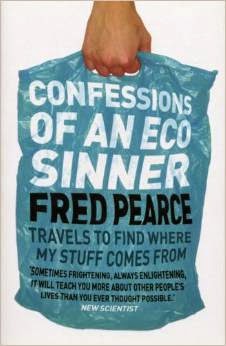
About six years ago I read 'Confessions of an Eco Sinner: Travels to find where my stuff comes from' by Fred Pearce (pictured above). Mind. Blown. I can't recommend this book enough. Fred Pearce is a journalist who in this book investigates what kind of impact the things he owns has on the world. He takes lots of everyday items and investigates their production, and sometimes also their disposal. It's freaking fascinating, eye-opening and, at times, alarming. But knowledge is power and all that. 

Anyways, one of the chapters is about the environmental and social impact his clothing has, and as part of that he looks into both organic and regular cotton production. He found that organic cotton, although obviously superior to regular cotton in its lack of pesticide usage, actually requires more water than regular cotton to grow and process. Cotton production is responsible for serious drought in various parts of the globe, included the truly frightening shrinkage of the Aral sea to just 10% of its former size (pictured below). So perhaps you could argue that the 'benefits' of organic cotton are somewhat outweighed, and maybe swapping all cotton production to the organic model would have even more dire consequences.

(image source: Wikipedia)

That is the perspective on organic cotton that I have carried with me for a number of years, but it was challenged at the end of last year when I attended a talk by Gina Pantastico, the Director of Operations at Cloud9 fabrics, which took place at the Village Haberdashery. She spoke a lot about the growing and processing of the organic cotton used in their fabric ranges. She assured us that the growing methods used by their suppliers in fact uses less water than conventional, non-organic cotton production. I have no cause to think that either she nor Fred Pearce is lying, so I conclude that either some cotton growers, including Cloud9's, have figured out superior methods, or that organic cotton growing in general has improved is the six+ year period since Fred researched and wrote 'Confessions of an Eco Sinner'. 

Carbon Footprint:

What does still require a large amount of water, however, is the processing and dying of the cotton, even when the dyes that are being used have been certified as safe for local ecosystems and the workers that are exposed to them. As she described the rest of the production process, from raw cotton crop to finished rolls of beautiful printed fabric, I couldn't help but think about all the energy that would also be used to power each stage. And then all the oil used to transport the cotton at its various stages of processing and to distribute the final product. I can't see that the amount of fossil fuels burned would be much, if at all, different from non-organic fabric production. 

(image source: Cloud9 Fabrics)

Conclusion:

I sometimes feel that when the word 'organic' is written on a garment or fabric label, it is perceived by some as a magic word that absolves us from any impact that the production, processing and transportation of it has had at all. I know that not everyone has the time or inclination to really look into what is involved in fabric production (myself included, I've only read a book and a few articles over the years), but it's important not to feel like we are wearing a halo because we bought an organic product. The conclusion I personally drew from having read 'Confessions of an Eco-Sinner' has not changed after the Cloud9 talk: we really need to reduce cotton production of all types because there is no method of cotton production that is environmentally sustainable.

We need to work out how slow down cotton consumption altogether, perhaps in part by focusing on using and reusing the vast quantities of textiles that already exist on our planet. Obviously, mass-produced poor-quality 'disposable' fast fashion is a major culprit, but home-sewers are not exempt from making better choices. I'm not suggesting that everyone who sews should stop buying fabric until their stashes are all used up and their local charity shops are empty, but we sewers definitely need to collectively rein it in a bit and be more mindful in our purchasing. This is a topic that I'm going to re-visit in another post very soon (bet you can't wait hahaha!).

So bringing it back to the topic in hand. Organic cotton is undoubtedly a better choice when buying fabric for lessening pesticide-related damage and, are far as Cloud9 are concerned at least, for reducing water usage in cotton production. If we can't source suitable second-hand, already-in-existence fabric for our projects, maybe organic cotton is the next best thing for home sewers? 


Sourcing Organic Cotton:

As I say, I've been thinking about this topic on and off for six years, so why am I'm finally writing about it now? Well, I got offered some free stuff. Within a short space of time, three businesses offered me some free organic cotton to sew with and review on my blog. Now, as committed as I am to sewing with existing textiles where possible, I'm not a crazy person. I'm not going to say no to some lovely fabric that I can make a cute garment for my daughter out of. Plus, more broadly, if I/we do need to source new fabric from time to time, we need to know what's available and what it's like to make garments from.  

The three businesses that have given me fabric recently are Only Organic Fabric Shop (who gave me the maroon jersey used to make the garments in these photos which I'll blog about separately very soon),  myfabrics.co.uk (who gave me some printed jersey for a garment that is currently on the sewing table, which will be blogged about in the next few weeks) and The Village Haberdashery (who gave me some of this Small World by Cloud9 needle cord, which I have great plans for...). 

I've also seen that Offset Warehouse has some excellent organic garment fabrics and Kitschy Coo seem to be the place to go for fun printed and plain organic jersey. Any other sources that you can recommend?

So, what about you? What are your thoughts on organic cotton? What is your thought processes behind making fabric purchases? Do you think the extra expense for organic cotton is worth it? Does anyone exclusively sew with the organic stuff? Jump into the discussion, I'd love to know what you think...


Related Posts Plugin for WordPress, Blogger...